





In Q2 2026, our foundation awarded 37 grants totaling over $16 million.
Our second quarter grantmaking spans portfolio areas, from organizations that leverage the pediatric healthcare system to reach families with school readiness supports to in- and out-of-school programs designed to increase future-ready skills. As always, we place an emphasis on grantmaking and strategic support that unlock innovation, evidence, and growth for our grantees.
Below, we highlight just some of the direct impact and ecosystem organizations we’re proud to support this quarter as we continue our 2026 grantmaking.
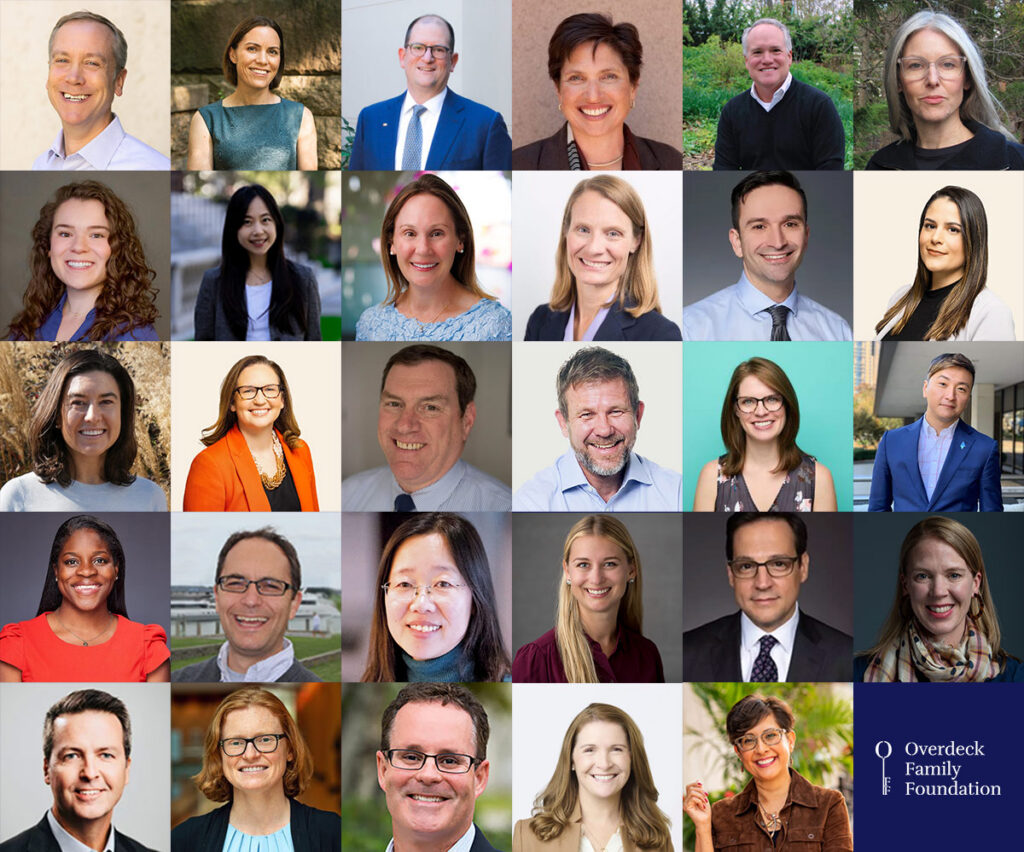
Photos from top left to right: Kevin Huffman, Emily Oster, Brent Maddin, Joanne Weiss, James Ryan, Tara Hofkens, Sarah Asson, Ying Xu, Anna Saavedra, Christine Cunningham, Christopher Doss, Kelly Escobar, Sarah Nixon Gerard, Laina Vlasnik Yip, James Kemple, Todd Grindal, Maggie Reeves, Chong-Hao Fu, Michelle Odemwingie, Jason Corso, Mingyu Feng, Britt Neuhaus, Mark Del Monte, Mindy Sjoblom, David Dimmett, Christina Weiland, Christopher Harris, Rahil Briggs, and Lynette Fraga
Unlocking Innovation and Growth (Direct Impact Grantees)
NEW GRANTEES/PARTNERSHIPS
New to the School Readiness portfolio is ZERO TO THREE’s HealthySteps, which received a one-year $250,000 pilot grant to strengthen measurement and implementation quality across its pediatric primary care model. HealthySteps embeds early childhood specialists into care teams and currently reaches over 520,000 children across 365 sites.
New to the Future Readiness portfolio is Project Lead The Way (PLTW), which received a fifteen-month $500,000 pilot grant to test lower-cost models of its problem-based science and engineering curriculum. PLTW will use the funding to develop six modular content units for elementary and middle school, designed to unlock new markets and support growth to 3.5 million students annually by 2030.
RENEWALS AND COMMITMENTS
$2,500,000 over 2.5 years to OpenSciEd to strengthen measurement and evaluation as it scales its high-quality, Next Generation Science Standards (NGSS)-aligned science curriculum. OpenSciEd currently reaches 115,000 educators and aims to serve up to seven million students by 2030. The organization will also conduct a quasi-experimental study with WestEd, as detailed below.
$1,666,667 (year three of a three-year grant) to the Robin Hood Learning + Technology Fund to sustain and deepen NYC Reads implementation to 400,000 students, advance teacher preparation to deliver high-quality instruction, and sunset with a durable field infrastructure.
$1,300,000 (year two of a three-year grant) to the Next Education Workforce at Arizona State University’s Mary Lou Fulton College for Teaching and Learning Innovation to support expansion of its team-based staffing model to over 1,700 educators in 2027, while improving student outcomes and teacher retention.
$1,000,000 over one year to Reach Out and Read to support continued quality improvement in its national pediatric literacy model, which reaches 4.8 million children annually through 41,000 clinicians across all 50 states.
$750,000 (year two of a two-year grant) to The ASSISTments Foundation to continue scaling its math formative assessment platform, which aims to reach over 165,000 students in SY 2026-27.
$750,000 (year two of a two-year grant) to OnYourMark to support the incorporation of artificial intelligence (AI)-enabled coaching for tutors, as well as continued development and testing of its virtual literacy tutoring model to reach 5,000 students in kindergarten through fifth grade.
$525,000 over 15 months to support Achievement Network (ANet)’s next phase of product development, commercialization, and implementation supports for Compass, its curriculum-aligned math assessment product.
$400,000 (year two of a three-year grant) to support the Museum of Science’s Youth Engineering Solutions (YES) curriculum and professional learning offerings for out-of-school-time educators. Funding will support the creation of additional high-quality, research-based science, technology, engineering, and mathematics (STEM) products and improvements in understanding educator practice. YES will also conduct a randomized controlled trial (RCT) with RAND, as detailed below.
$250,000 (year two of a two-year grant) to Leading Educators to support the design and expansion of an integrated model combining team-based staffing with high-quality instructional materials (HQIM)-aligned professional learning. Funding will enable Leading Educators and Public Impact to strengthen implementation quality, refine teacher leader roles, and build the operational conditions needed for effective coaching and instructional improvement.
$200,000 (year two of a two-year grant) to the Next Education Workforce at Arizona State University’s Mary Lou Fulton College for Teaching and Learning Innovation to support the design and expansion of an integrated model that combines team-based staffing with HQIM-aligned professional learning led by Instruction Partners. Funding will enable continued refinement of the model, including strengthening planning routines, leadership capacity, and instructional coherence to support effective implementation.
Unlocking Evidence: RESEARCH and FIELD BUILDING
Ecosystem grants are designed to clear the path to scale for our direct impact grantees and strategies.
$2,000,000 to Accelerate (year two of a two-year grant) to support continued evidence-building on high-impact tutoring approaches, features, and innovations, including at least seven RCTs and nine quasi-experimental studies focused on traditional, tech-enabled, and AI-enabled tutoring models, comprising roughly half of Accelerate’s research portfolio.
$1,250,000 over two years to SRI International to support an independent RCT evaluating the impact of LENA Grow’s data-driven educator coaching model on Pre-K conversational turns and children’s school readiness.
$1,000,000 (year five of a five-year grant) to Robin Hood’s Fund for Early Learning (FUEL) to support partnerships that improve early childhood outcomes for New York City infants and toddlers, with a goal of reaching 40,000 children in 2026.
$900,000 over 2.5 years to RAND to support an RCT evaluating the impact of the Museum of Science’s YES out-of-school-time curriculum on upper elementary students’ persistence, problem solving, and STEM knowledge and interest.
$900,000 over three years to WestEd to support a quasi-experimental study estimating the impact of OpenSciEd’s curriculum for kindergarten through fifth grade and aligned professional learning model on fifth grade students’ science and reading achievement and future-ready skills.
$400,000 (payment two of two) to Education Northwest to support an externally conducted RCT evaluating the impact of Springboard Collaborative’s family engagement model on foundational reading skills and early literacy outcomes.
$300,000 over two years to Urban Institute via Rockefeller Philanthropy Advisors to support the second cohort of the Student Upward Mobility Initiative. Funding will be used to support 13 studies that advance field knowledge on future-ready outcomes, including agency, cognition, and connection.
$250,000 over 15 months to the American Academy of Pediatrics to support the development and testing of implementation tools tied to the upcoming Bright Futures revision, helping pediatricians incorporate school readiness, early literacy, and early relational health guidance into routine well-child visits.
$200,000 (year two of a two-year grant) to the Marsal Family School of Education at the University of Michigan to support continued development and testing of an AI-enabled tool designed to identify Pre-K teaching practices most predictive of school readiness.
$200,000 (year two of a two-year grant) to the Center for Economic and Social Research at the University of Southern California to support the Understanding America Study, composed of nationally representative parent and teen surveys on absenteeism, student engagement, cell phone policies, and AI usage in education.
$150,000 disbursement (year two of a three-year grant) to The Council of Chief State School Officers (CCSSO) to support a multi-state implementation study of HQIM, examining the relationship between implementation quality and student achievement across five states.
$150,000 over 15 months to the Education Data Center via the National Center for Civic Innovation to launch a comprehensive national K-12 attendance database. The database will build on EDC’s State Assessment Data Repository by integrating attendance data, documenting state data definitions and gaps, and promoting usage of this resource.
$100,000 (payment two of two) to the Research Alliance for New York City Schools at New York University to support a study of Saga Education’s all-virtual tutoring model, examining its impact on student math achievement, the implementation conditions associated with impact, and the cost of providing tutoring.
$75,000 (payment two of two) to the Harvard Graduate School of Education to support an RCT examining the impact of media that incorporates predictive conversational AI on young children’s STEM learning and engagement.