School Readiness
Create strong foundations for early learning.

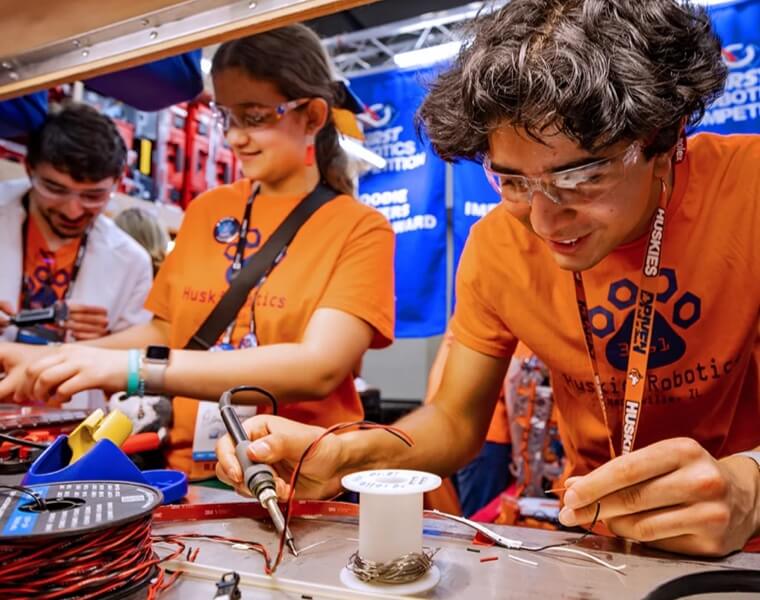
Courtesy of FIRST
Students’ progress in math proficiency has been largely flat since 2022, according to the National Assessment of Educational Progress, demonstrating a challenge to recover to pre-pandemic levels. At the same time, the rate of innovation in the U.S. has also declined, limiting the number of new inventions, discoveries, and enterprises.
Over the past five years, Overdeck Family Foundation has invested over $56 million in expanding access to joyful and rigorous out-of-school science, technology, engineering, and math (STEM) programs spanning afterschool and summer settings.
These programs are designed to build students’ STEM confidence, curiosity, and identity, preparing the next generation of creative, capable problem-solvers. Research suggests that participating in high-quality out-of-school programs can not only improve academic outcomes, but can spark curiosity and engagement, making learning fun and meaningful for today’s youth by extending and supporting their academic growth and overall development.





















Revenue model innovations to improve the affordability and sustainability of out-of-school programs.
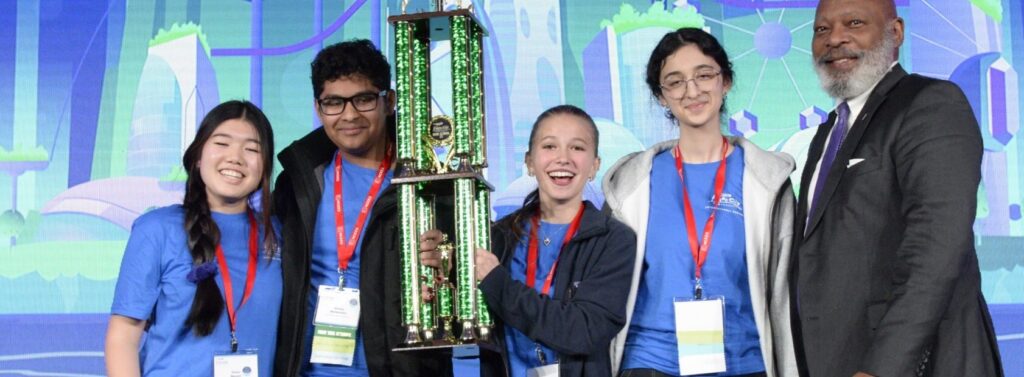
Over the past five years, Overdeck Family Foundation grantees operating in the out-of-school space have pursued revenue model innovations that simultaneously promote participation for families, regardless of income, and diversified, resilient funding that sets them up for long-term success.
The organization chose to launch a registration and finals fee structure for a new high school program, keeping its signature middle school model fee-free for students. Concurrently, DiscoverE secured corporate partnerships and awards to cover travel costs for their in-person competition, doubling down on partnerships with mission-aligned for-profit organizations that had a unique interest in helping youth develop science, technology, engineering, and math (STEM) interest, engineering content knowledge, and durable skills. Since implementation in 2023, these shifts contributed to 26 percent growth in total revenue and a 21 percent growth in earned revenue for the organization, without compromising student-level participation, which has continued to grow.
“Overdeck Family Foundation’s capacity-building supports have been an invaluable resource for our team as we determine a business model that allows us to scale our programs for greater impact,” said Kathy Renzetti, executive director and CEO.

Courtesy of Learn Fresh
Following revenue-focused capacity building, Learn Fresh’s new strategy contributed to a 46 percent year-over-year increase in earned revenue in 2025. Simultaneously, expanded philanthropic, corporate, and professional sports league partnerships have kept the core experience available at no cost, resulting in the ability to continue serving primarily low-income communities.
With the enrichment spending gap growing between high-income families and their middle- and low-income peers, we remain dedicated to supporting revenue model innovation for out-of-school time organizations to ensure both increased access and long-term sustainability.
Research to better understand the impact of out-of-school STEM learning on academic and socioemotional outcomes.
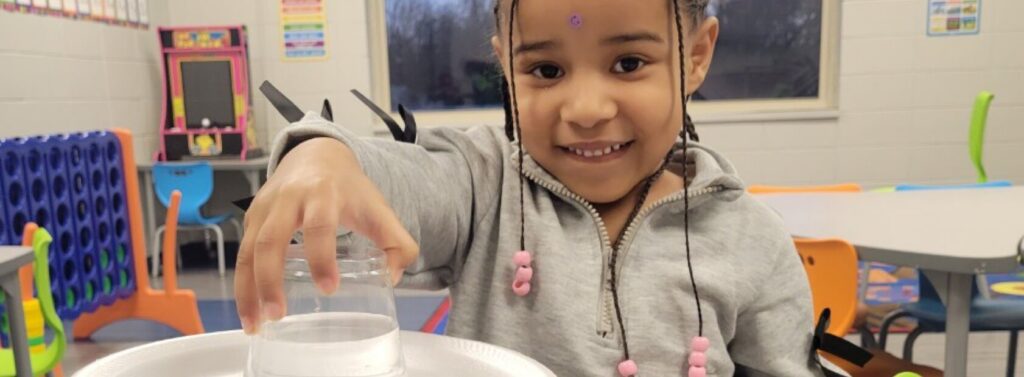
Over the past five years, Overdeck Family Foundation has invested in research to better understand the impact of high-quality out-of-school STEM learning on both academic and socioemotional outcomes, such as math skills, science knowledge, self-efficacy, engagement, and STEM identity. Here’s what we’ve learned about the role program duration and quality play in producing measurable learning gains:
Scale of high-quality out-of-school STEM programs and experiences.

Engaging Young People in Hands-On Robotics To Foster Positive STEM Attitudes and Interests
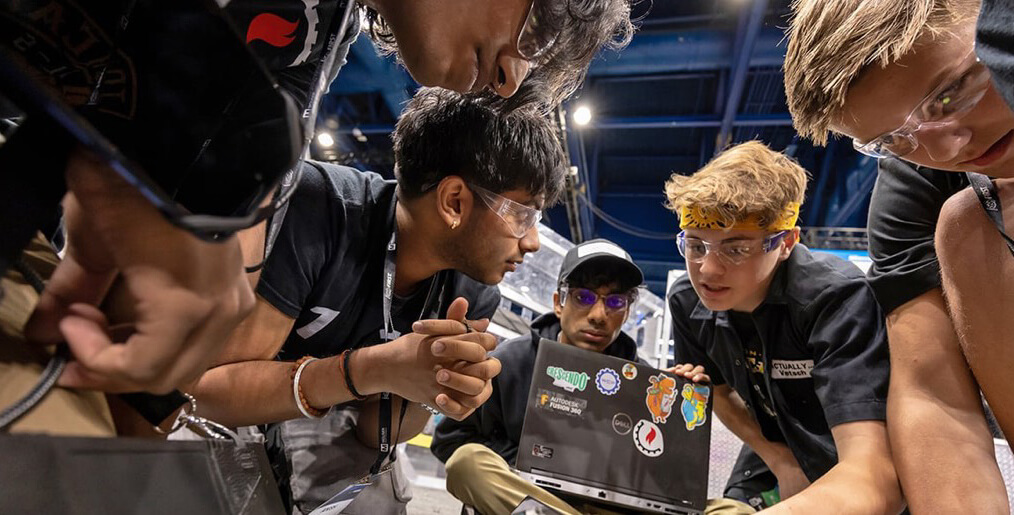
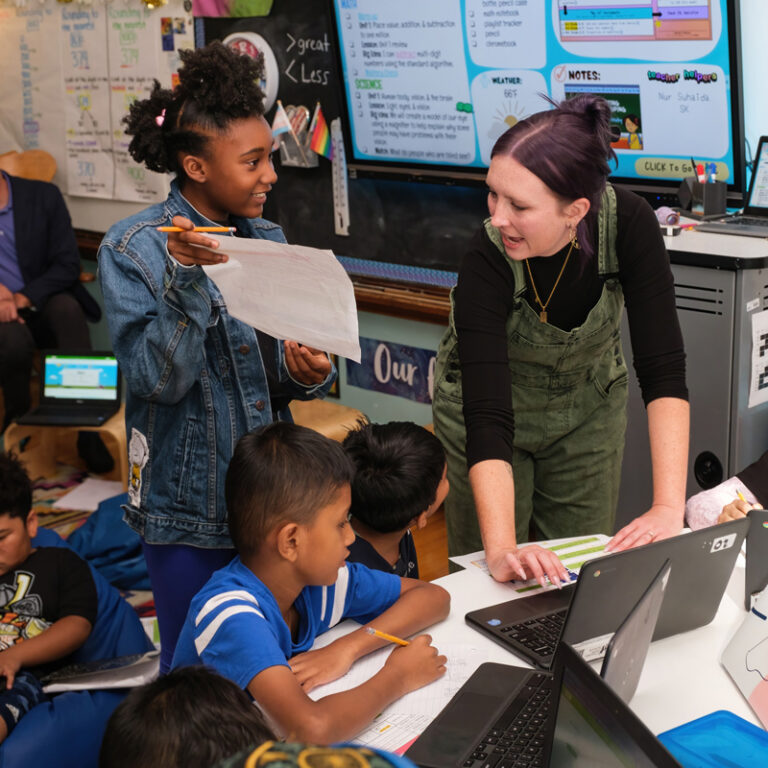
FIRST uses evidence-based strategies to increase student interest in science, technology, engineering, and math (STEM), including hands-on learning, teamwork on real-life problems, exposure to careers and adult mentors, and a robotics competition that completes the experience.
Overdeck Family Foundation has supported FIRST’s longitudinal study examining how participation in FIRST during middle and high school is associated with long-term outcomes. In 2024, FIRST completed the tenth and final wave of longitudinal data collection. Ten years after participants’ original enrollment, the study continues to find sustained positive benefits of FIRST. Compared to demographically similar students who did not enroll in the program, students who participated in FIRST:
Over the past seven years, Overdeck Family Foundation has played an instrumental role in supporting FIRST in its pursuit of scale and deeper evidence of impact, including a recent implementation study of its FIRST LEGO® League Explore (ages six through 10), which indicates positive gains in outcomes like interest in STEM and understanding STEM content, as well as improved social-emotional outcomes like creativity, teamwork, and problem-solving.
FIRST has grown its reach by 189 percent since 2021.

Strengthening Students’ STEM and Interpersonal Skills Through Interactive Games and Partnerships With the NBA, MLB Players Trust, and MLS
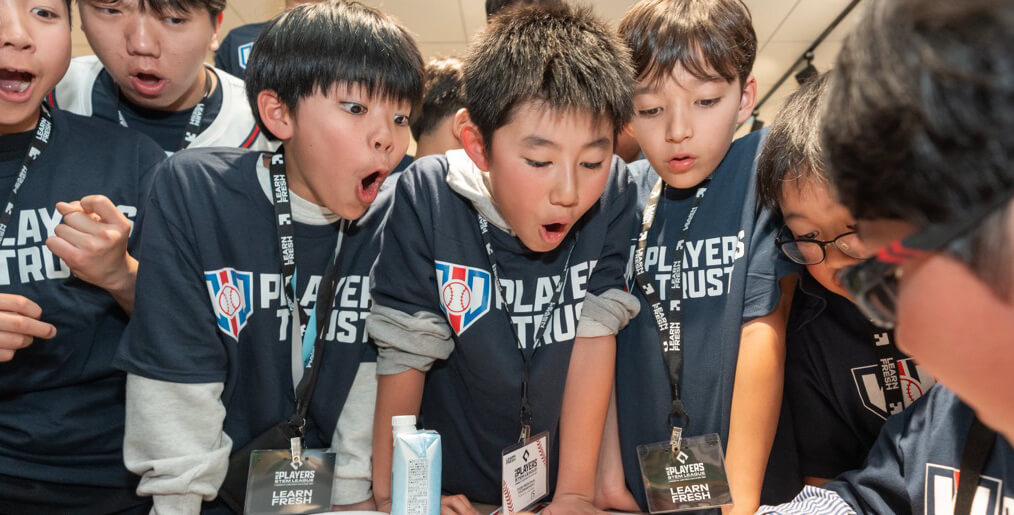
In collaboration with premier sports organizations such as the NBA, MLB Players Trust, and MLS, Learn Fresh has developed programs like NBA Math Hoops, MLB Players STEM League, and MLS STEM Goals, which foster students’ resilience, confidence, and sportsmanship, in addition to academic growth with a focus on algebra readiness.
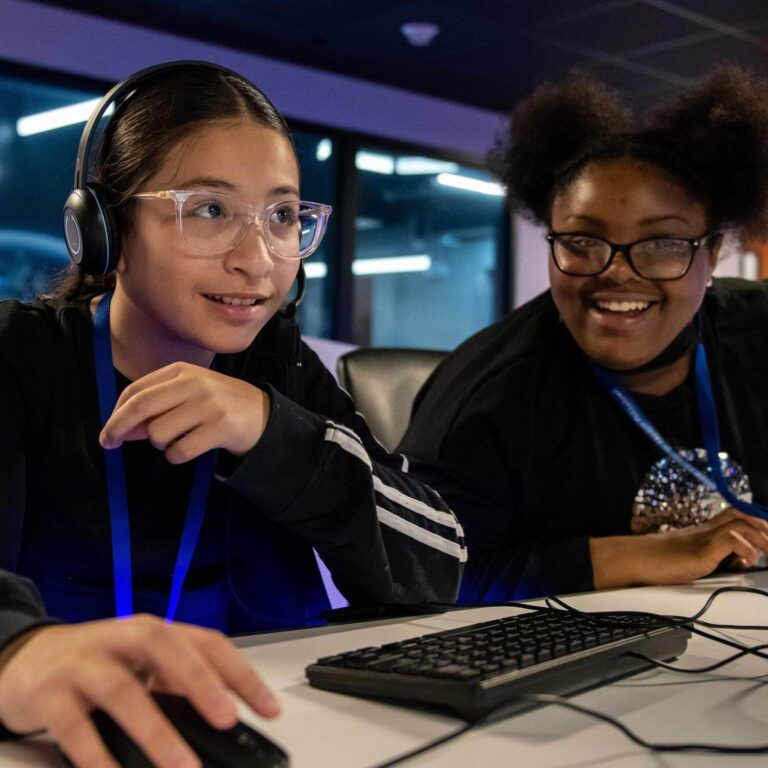
Learn Fresh’s expansion was bolstered by steady demand for NBA Math Hoops—the organization’s founding program designed to help students learn fundamental math and social-emotional skills through the game of basketball. In the same period, Learn Fresh also saw substantial growth of its newest offerings: MLB Players STEM League (37 percent year-over-year growth) and MLS STEM Goals (72 percent year-over-year growth).
As Learn Fresh’s footprint has grown, so has visibility and support for its programs. In 2025, the organization maintained partnerships with 31 premier sports teams, supporting local program implementation and expansion. And in June, the NBA Headquarters in New York City hosted the 2025 NBA Math Hoops Global Championship, demonstrating deep partnership and commitment from the league. An Overdeck Family Foundation grantee since 2020, Learn Fresh has capitalized on capacity-building support to strengthen its evidence-building, communications, and revenue model. The organization has specifically focused on expanding its evidence base, building on initial positive findings related to math fluency and social-emotional competencies by working with WestEd to conduct a randomized controlled trial that aims to better understand the impact of NBA Math Hoops on students’ math learning, social-emotional development, and self-efficacy and enjoyment of math.
Since SY 2021-22, Learn Fresh has expanded its reach by 77 percent.

Promoting Problem-Solving Through Real-World Engineering Design Challenges
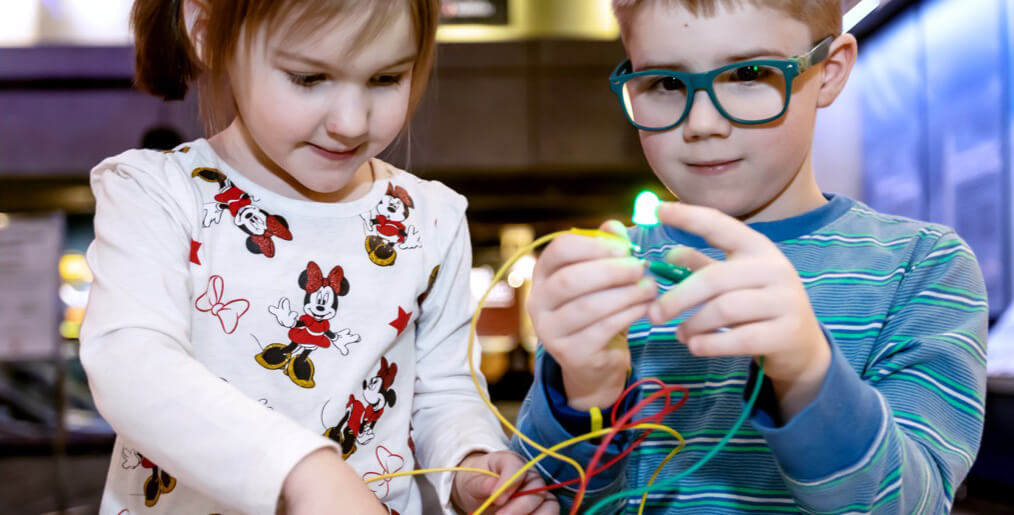
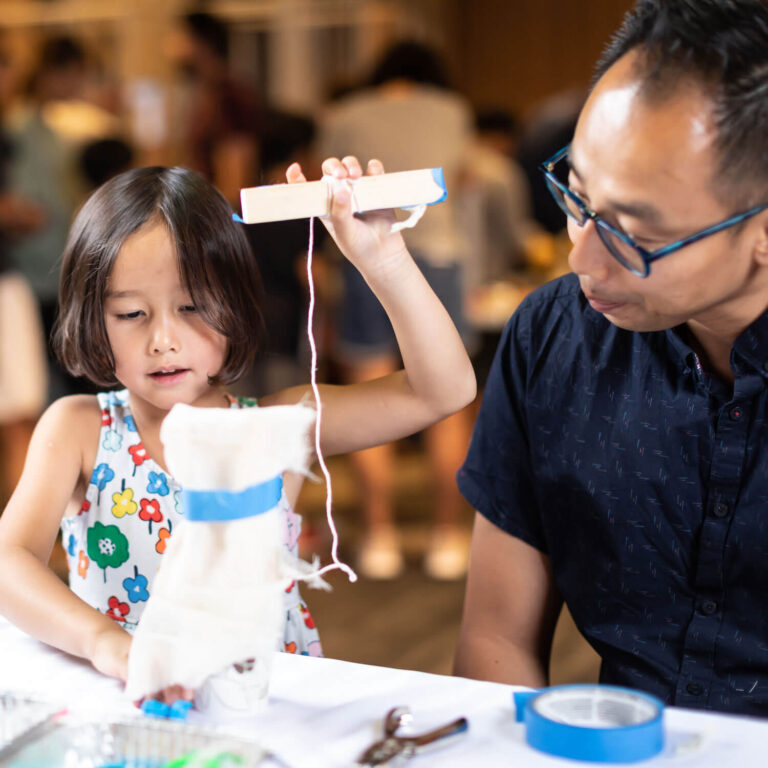
The Museum’s PK-12 Education team creates science, technology, engineering, and math (STEM) curricula for Pre-K through eighth grade students, prepares educators to teach STEM, and conducts rigorous research to inform K-12 engineering education. The team offers educators of all kinds—in- and out-of-school—access to its Youth Engineering Solutions (YES) curricula and provides families with a suite of resources to lead engineering and computer science activities at home. Its growth has been primarily fueled by educator demand for high-quality, engaging engineering curricular materials for in-school and out-of-school time programs.
While YES curriculum has been adopted nationwide, the Museum of Science continues to play an important role in creating access to high-quality STEM learning experiences in its home city as well. It has embarked on a major renovation project to create a new Public Science Common convening space at the Museum in Boston, helping the institution become a community resource and demonstrating its continued commitment to serving children wherever they learn: at school, after school, at home, or at the Museum.
An Overdeck Family Foundation grantee since 2018, the Museum of Science has used grant funding to scale its curricula and adapt its foundational principles (creative problem-solving; collaboration; and authentic, real-world challenges) to create engaging learning activities for children and their families to do at home. To support this work, we’ve provided capacity building to inform growth planning and supplement the Museum’s research and evaluation capacity.
The number of students accessing YES’s engineering and computer science units has increased 60 percent since SY 2021-22.
Discover how we’ve helped grantees unlock innovation, evidence, and growth.