School Readiness
Create strong foundations for early learning.


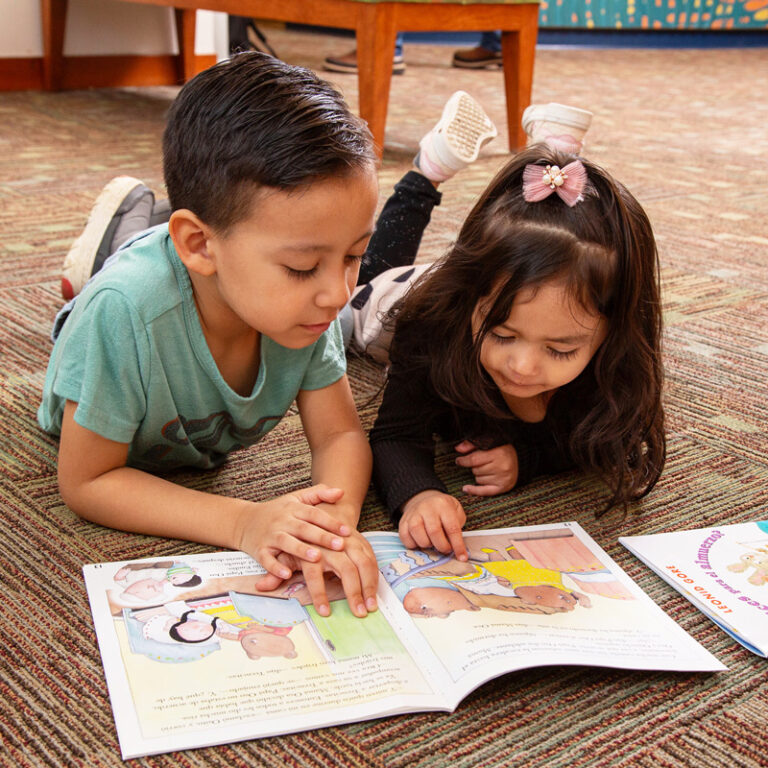
Courtesy of Reach Out and Read
Children who enter school with key readiness skills have an 82 percent chance of mastering basic skills by age 11, compared with 45 percent for young children who are not “kindergarten ready.” Yet, in 2022, only 64 percent of three- to five-year-old children were “on track” toward kindergarten readiness, with variations of over 20 percentage points across states.
In addition to supporting families through evidence-based programs that improve at-home learning, Overdeck Family Foundation’s work over the past five years has focused on expanding access to and professional development for high-quality Pre-K curricula, increasing the likelihood that young children experience the benefits of early learning.
Research shows that high-quality Pre-K is one of the most powerful levers for improving children’s early learning and long-term outcomes, with benefits ranging from stronger early literacy and math skills to higher rates of high school graduation and college attendance. Yet only 19 out of 64 state-funded preschool programs met the National Institute for Early Education Research’s threshold for quality professional development in SY 2023-24.
Since 2021, Overdeck Family Foundation has invested over $63 million in funding, studying, and strengthening early learning environments, including at-home learning and evidence-based early education models and supports that help children enter kindergarten ready to thrive.






















Evidence-based solutions to engage families in building at-home learning habits for their children.
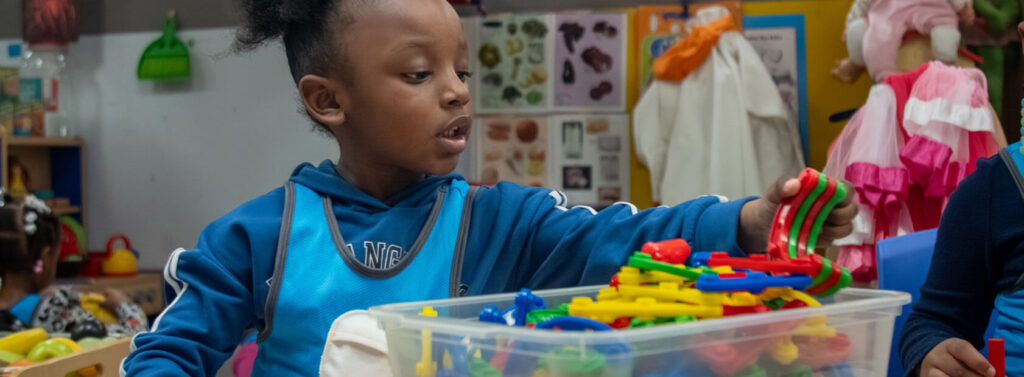
Over the past five years, several Overdeck Family Foundation grantees have introduced innovative ways to engage families in building at-home learning habits for their children.
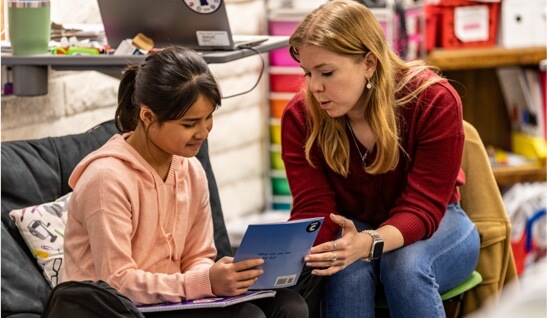
The organization uses the only near-universal channel for reaching young children and their families to promote shared reading and healthy early brain development. Trusted clinicians provide families with developmentally appropriate books and guidance during well-child visits, helping caregivers build daily reading habits and strengthening relationships that support language growth, school readiness, and long-term educational outcomes. In 2025, the organization reached 4.8 million children, an increase of 200,000 children from the prior year.
A number of older studies show that Reach Out and Read is associated with improvements in the amount of at-home reading parents engage in and the quality of at-home literacy practices. More recent research has found evidence that the benefits of Reach Out and Reach can be achieved on a wide scale. For example, a 2023 large-scale correlational study done across 427 pediatric clinics in North and South Carolina found that the program was associated with a small to moderate increased likelihood of reading every day, engaging in child-centered reading behaviors, reading to the child for at least 30 minutes every day, and taking the child to the library.
Overdeck Family Foundation began funding Reach Out and Read in 2021, and Carly Roberts, senior portfolio manager of School Readiness at the Foundation, has served on Reach Out and Read’s Board of Directors since 2024, helping shepherd in a new focus on innovation and implementation.

Courtesy of Reach Out and Read
The organization, which offers two-way communication in more than 150 languages, also provides built-in coaching to help schools and families improve communication and student outcomes, and actionable data on student progress, simultaneously addressing barriers of language, time, and trust that can get in the way of school-home partnerships.
In 2025, TalkingPoints served over 4.5 million students, 10 percent of all students in the U.S. education system. With the advancement of technology and the addition of generative artificial intelligence (genAI), TalkingPoints has expanded its original product and is experimenting with in-the-moment suggestions and guidance for both teachers and families that can help improve family engagement and student learning. These include a real-time “message mentor” that simplifies communication by helping teachers craft messages that are more positive, asset-based, and accessible; a personalized activities generator aligned with grade-level work and curriculum standards; and an attendance toolkit that allows for tracking and family reporting.
A 2024 study done in Tulsa Public Schools, a large, urban school district, found that schools using TalkingPoints saw an average 24 percent decrease in student absenteeism rates. This research builds on a previous study finding that adoption of TalkingPoints was associated with a 15 percent decrease in absenteeism in another large urban district. In 2025, Overdeck Family Foundation funded a rigorous randomized controlled trial of the TalkingPoints family engagement platform, with results expected by 2027.
Since the Foundation began funding TalkingPoints in 2020, it has grown its reach tenfold while continuing to innovate, strengthen its evidence base, and improve its data and organizational infrastructure. Aligned capacity building has supported an internal analysis of message characteristics to identify best practices and provide tips and nudges for users to drive deeper impact, as well as helped gather insights from buyers to inform potential pathways for TalkingPoints’ next phase of growth.
These two organizations demonstrate innovative ways to engage families using existing channels, new technology, and a deep understanding of the important role families play as their child’s first teacher. We’re excited to continue exploring other scalable channels for family engagement that could potentially unlock the benefits of these practices for millions of children.
Research to identify the most scalable approaches for strengthening Pre-K quality and improving kindergarten readiness.

Over the past five years, Overdeck Family Foundation has invested in research to identify the most scalable approaches for strengthening Pre-K quality and improving kindergarten readiness. Here’s what we’ve learned:
Scale of evidence-based early learning tools and curricula and aligned professional learning supports.

Expanding Access to Relationship-Driven Professional Learning and Coaching for Early Childhood Educators

SEEDS of Learning (formerly FluentSeeds) emphasizes quality in-classroom interactions, early literacy skills, and kindergarten readiness through the lens of building responsive caregiver-child relationships. A recent randomized controlled trial in Pre-K classrooms in San Francisco’s East Bay Area found that SEEDS improved children’s foundational literacy skills, with impacts equivalent to about two to three months of learning over two years. Notably, researchers found that the impacts were largest in the second year of program implementation, suggesting that children are likely to benefit more in settings that commit to longer-term adoption of SEEDS.
When the organization (at the time called FluentSeeds) received its first grant in 2021, it was reaching 11,000 children and grew primarily by reputation. In 2024, FluentSeeds merged with Collaborative Classroom, a nonprofit curriculum provider with a robust sales infrastructure.
Overdeck Family Foundation’s capacity-building support helped FluentSeeds develop a repeatable and reliable sales process focused on increasing its earned revenue, which led to supporting a strategic merger designed to enable more children to benefit from well-trained educators and high-quality early learning. Post-merger, the Foundation supported Collaborative Classroom to build sales capacity specific to the Pre-K market through state-by-state scale planning. Additional capacity building helped the organization gain a better understanding of its customers’ needs, resulting in an impressive NPS score of 80. Most recently, we supported Collaborative Classroom to pursue a strategic partnership with fellow grantee AppleTree Institute as part of its growth strategy, making Collaborative Classroom the exclusive provider of AppleTree’s comprehensive Pre-K curriculum, Every Child Ready.
SEEDS of Learning has grown its reach by approximately 72 percent since SY 2021-22.

Improving Early Language Skills Through “Talk Pedometer” Technology
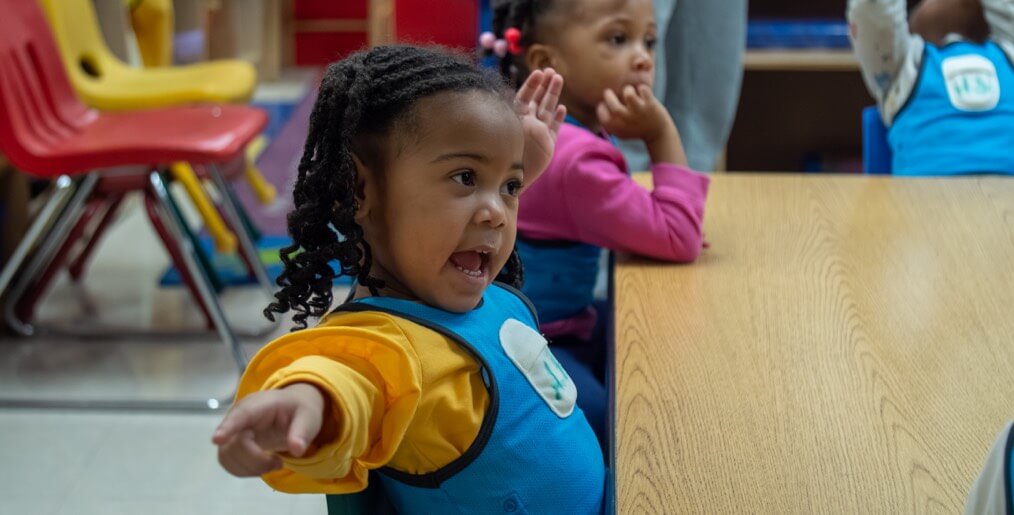
LENA’s small wearable device for children, often referred to as a “talk pedometer,” measures conversational turns delivering language environment data that help adults increase interactive conversation and highlight opportunities to improve classroom quality and child outcomes.
A 2021 internal study found that, in typical childcare settings, only four percent of children 18-24 months old consistently receive the optimal level of interaction to support their language development. The organization launched LENA Grow to address this challenge, utilizing talk pedometer technology to offer professional development and individualized strengths-based coaching for early childhood educators. Early evaluations of Grow found that the model could improve the number of conversational turns across a diverse range of early care and education settings. More recent research published in 2025 has strengthened the evidence that Grow can also benefit young children’s development. For example, in a quasi-experimental matching study, researchers at LENA found that Grow was associated with about two times greater odds of students demonstrating language and literacy readiness at the start of kindergarten.
Overdeck Family Foundation has supported LENA since 2017, when it reached less than 1,000 children through LENA Grow. Our funding and aligned capacity building have helped the organization continue to innovate on its program model, reduce implementation costs, generate rigorous evidence to boost early language outcomes, and grow reach. Carly Roberts, senior portfolio manager of School Readiness at the Foundation, has also served on LENA’s Board of Directors since 2020.
LENA Grow has expanded its reach by 314 percent since 2021.
Combining Comprehensive Curricula With Professional Development To Support Children’s Executive Function Skills
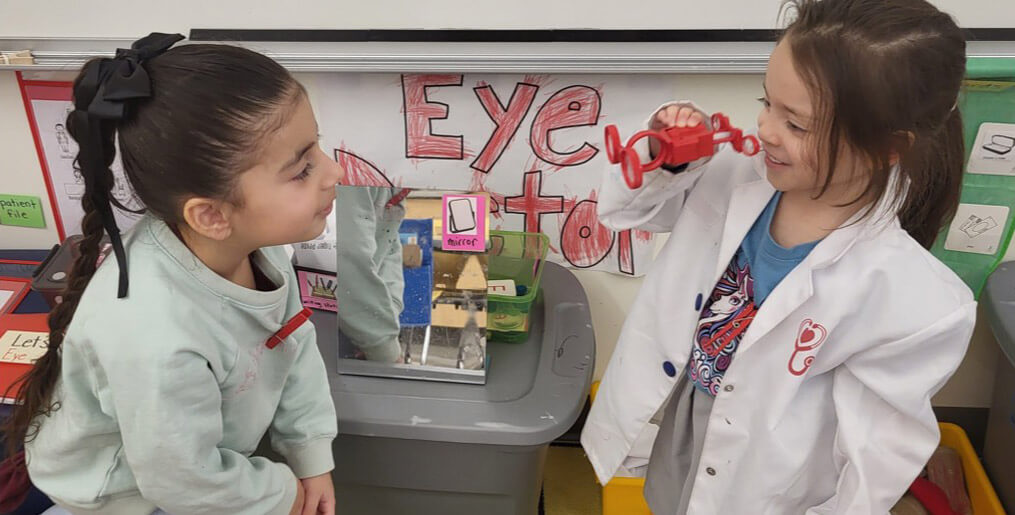
Tools of the Mind curricula support the development of executive function skills for children, which are shown to be predictive of reading and math achievement, as well as outcomes beyond schooling and into adulthood. Kindergarten programmatic data from 2020-21 show that children in Tools of the Mind classrooms were significantly more likely to read at grade level (56 percent) compared to their non-Tools counterparts (48 percent).
To accelerate its growth and lower barriers to entry, Tools developed Bite of Tools, a standalone professional learning offering designed to help teachers build their understanding of children’s self-regulation development and provide practical strategies to build self-regulation skills through playful classroom routines. Bite of Tools has been particularly helpful as a high-impact entry point given the long timeframe of curriculum adoption cycles. After launching in 2023, Bite of Tools now reaches over 900 educators.
In 2023, Tools of the Mind also piloted SEED, an assessment of children’s self-regulation development that helps educators gain insight into these critical skills in just 90 seconds within regular classroom activities, enabling teachers to scaffold based on where more support is needed. Over a two-year pilot, SEED generated 11,386 classroom-level data points across 83 classrooms, giving teachers actionable insight into executive function skills that are typically difficult to measure during everyday instruction. Initial data and feedback suggest SEED is user-friendly and valuable for teachers, and early pilot analysis also found that SEED-measured self-regulation development predicted literacy outcomes in a sample of Tools Pre-K children.
Since 2021, Overdeck Family Foundation’s multi-year general operating support has provided Tools of the Mind with maximum flexibility as it continues to innovate and scale. Our associated capacity-building support also helped Tools grow its reach by 29 percent from 2024-25 by building the team’s outbound sales capacity and developing a plan to target states and districts with favorable scale conditions.
Tools of the Mind has grown its reach by approximately 123 percent over the past five years.