School Readiness
Create strong foundations for early learning.

Courtesy of Saga Education
In 2024, only 31 percent of fourth graders and 30 percent of eighth graders scored at or above NAEP Proficient in reading. Thirty-nine percent and 28 percent, respectively, scored at or above NAEP Proficient in math—a decrease from already-low performance in 2019.
Rigorous evidence has found that high-impact tutoring—where students receive substantial, targeted, curriculum-aligned instruction each week—can help students, especially those from low-income families, recover from pandemic-related learning loss and boost achievement. However, scaling these programs is a challenge due to the high cost-per-student, the need for a well-trained tutoring workforce, and the importance of effectively allocating support to those who need it most.
Over the past five years, Overdeck Family Foundation has invested over $43 million to identify and improve evidence-based, high-impact tutoring solutions that can yield substantial gains in student achievement cost-effectively and at scale.





Technology to make high-impact tutoring more affordable while delivering comparable results to in-person models.
Over the past five years, Overdeck Family Foundation has looked for opportunities to make high-impact tutoring more affordable while delivering comparable results to fully in-person models.
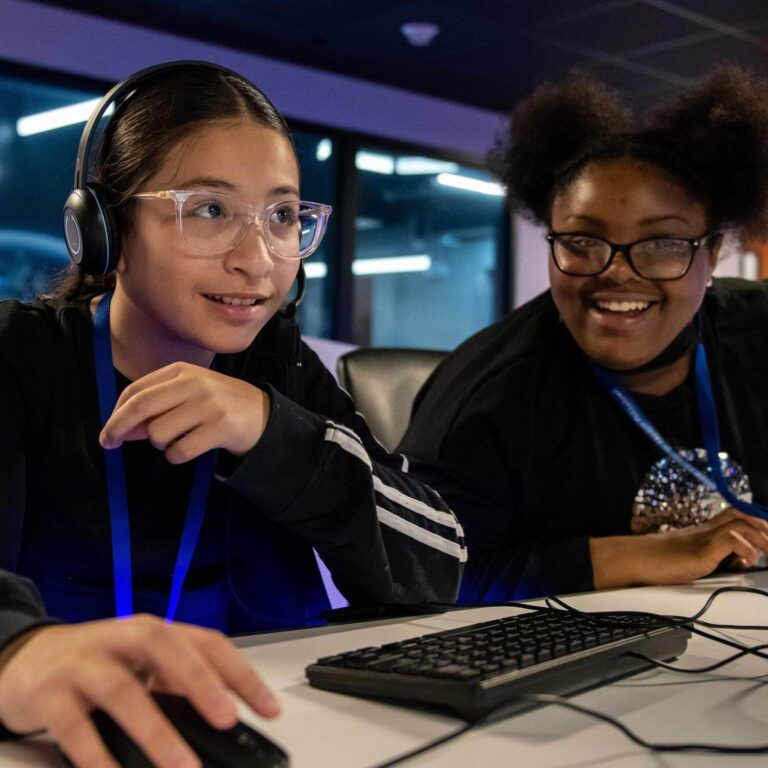
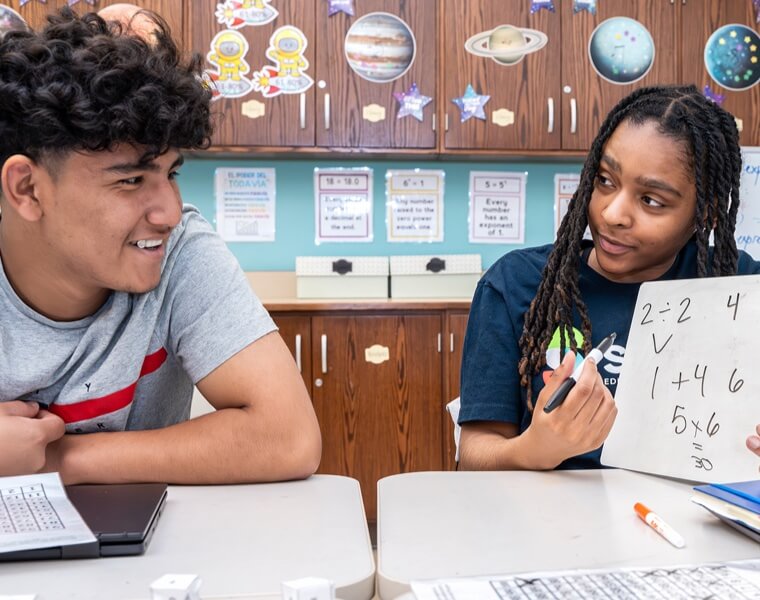
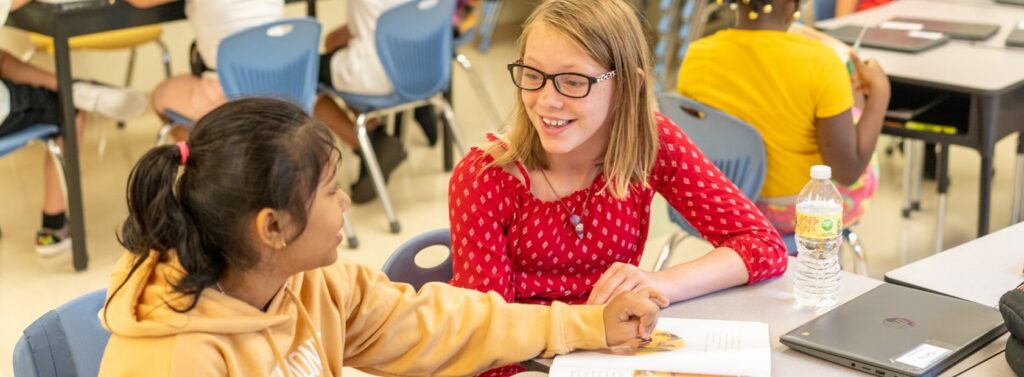
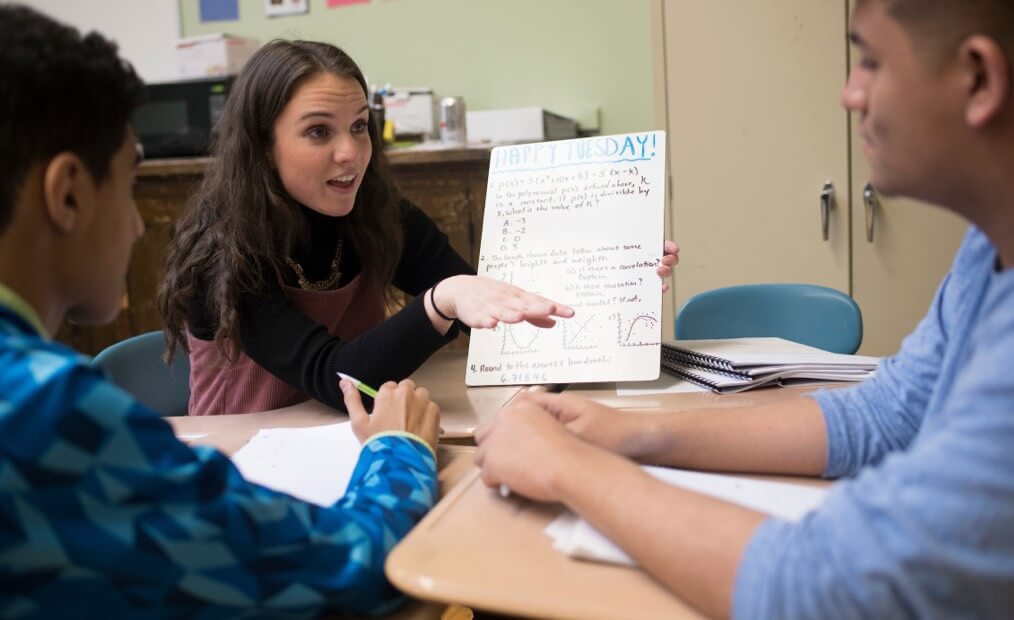
With Arnold Ventures, we provided a grant to the University of Chicago Education Lab to study Saga Education’s new hybrid tutoring model, in which students worked in groups of four: two students with an in-person tutor and two on aligned independent computer-assisted learning, alternating every other day, at a cost of $2,200 per student. The researchers found impacts of approximately 0.23 SDs, or about a year of extra learning, on math achievement for ninth graders participating in the hybrid program, highlighting the potential of blended tutoring to support learning more cost-effectively than fully in-person programs.
We also funded the University of Chicago Education Lab and MDRC to complete the Personalized Learning Initiative (PLI), a national initiative using multiple randomized controlled trials (RCT) to test the impacts of different tutoring approaches on students’ academic achievement. Researchers found that tutoring impacts were robust across models, with lower-cost models ($1,200 per student) proving as effective as higher-cost models ($2,000 per student), and virtual tutoring proving as effective as in-person tutoring.
Courtesy of Saga Education
We’ve explored the potential of fully virtual tutoring.
In 2023, researchers at Stanford University conducted an RCT of OnYourMark’s virtual program comparing literacy achievement at the end of the school year for students in kindergarten through second grade randomly assigned to receive 1:1 virtual tutoring, 2:1 virtual tutoring, or business-as-usual instruction. OnYourMark’s 1:1 virtual tutoring improved students’ foundational literacy skills by about 0.12 SDs, or roughly one to two months of learning, depending on grade level. We’ve also provided OnYourMark with capacity-building support aligned with using data to inform both program-specific strategy as well as ongoing continuous improvement efforts.
Lastly, we’ve explored the potential of artificial intelligence (AI) to support both tutors and students. For example, we supported Saga Education and the University of Colorado Boulder to work together to understand how generative AI tools can review tutoring sessions and provide feedback to tutors, which, if effective, can more efficiently increase tutors’ efficacy.
Using data from a dashboard that offers real-time individualized suggestions, tutors can virtually support the students who most need their guidance, allocating time more efficiently while providing personalized learning support. A propensity score matching analysis comparing students with access to PLUS to those in business-as-usual settings found that PLUS students made gains of 6.8 points on the NWEA math assessment across the school year compared to 3.6 points for students receiving typical instruction and no tutoring. We also provided pilot funding to Khan Academy to create Khanmigo, a student-directed chatbot that acts as a personal tutor; evidence generation is underway to understand its impact on student learning outcomes.
We remain cautiously optimistic about the role technology can play in improving and scaling high-impact tutoring, expanding access, and advancing outcomes for the students most in need of support.
Research to identify which types of tutoring are most effective and how to scale and implement those models for cost-effective impact.
Despite evidence demonstrating that high-impact tutoring can effectively improve student outcomes, districts risk being disappointed by the lack of impact after implementing a tutoring program, even one that is high quality. This can lead them to wonder whether investing in tutoring is worth it, especially as federal funding expires.
Over the past five years, Overdeck Family Foundation has invested in research to identify which types of tutoring are most effective and how to scale and implement those models so they lead to cost-effective impact. Here’s what we’ve learned:
The scale of cost-effective and high-impact tutoring solutions.
Expanding High-Impact Virtual Tutoring to Improve Students’ Early Literacy Skills
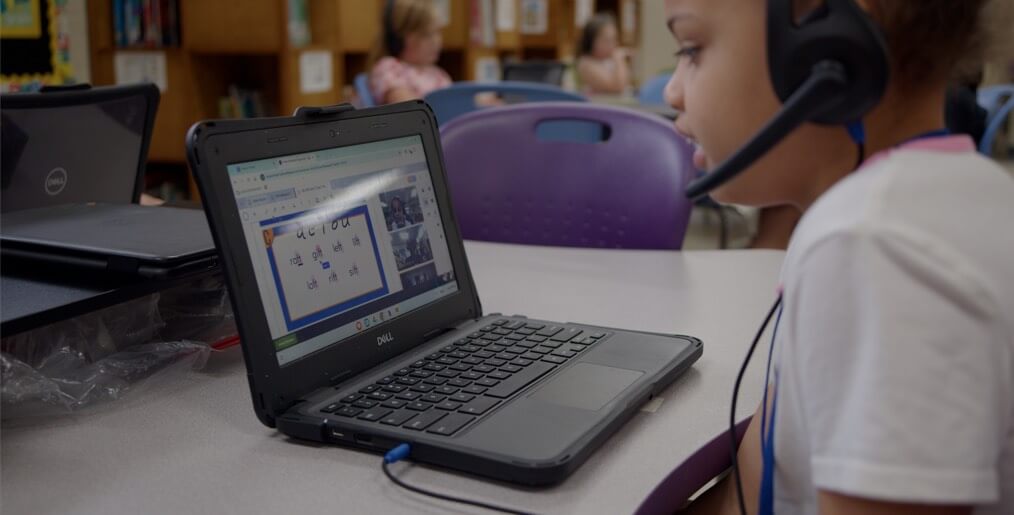
Launched in 2021, OnYourMark recruits, trains, and manages tutors from across the country, matching them with schools seeking to increase students’ reading ability. Throughout the school year, tutors meet with students using a video conferencing platform during regularly scheduled small-group instruction or independent learning.
To understand the potential impact of OnYourMark’s virtual tutoring, Overdeck Family Foundation funded a randomized controlled trial (RCT) conducted by a team of researchers from Stanford University and led by Susanna Loeb. The study examined over 2,000 students across 12 schools; about half of the students were randomly assigned to receive tutoring from OnYourMark, while the other half were randomly assigned to receive instruction as usual. Study findings revealed that one-on-one virtual OnYourMark tutoring had a positive impact equivalent to about a month of learning on students’ early literacy skills, as measured with an assessment called the DIBELS. Impacts were largest on kindergarteners’ knowledge of letter sounds and first graders’ decoding skills. Perhaps less expected were smaller and null impacts of OnYourMark’s two-on-one tutoring. OnYourMark is now engaged in a second RCT that aims to address implementation challenges for the two-on-one model and better understand the impact of a more scalable and cost-effective approach for delivering tutoring to students in kindergarten through second grade.
Bolstered by both existing and ongoing evidence-building, OnYourMark continues to innovate on ways to improve the cost-effectiveness of high-quality tutoring. In 2023, the organization launched a pilot with fellow grantee Magpie Literacy, building on previous Overdeck Family Foundation-funded research into the effectiveness of blended tutoring models. Review of pre-post proficiency gains from the pilot suggests potential additive benefits of blending two days of OnYourMark tutoring with three days of personalized, independent instruction from the Magpie Literacy platform.
In addition to funding OnYourMark’s RCT, which sets up the organization to meet “Tier 1” evidence standards, as established by ESSA, Overdeck Family Foundation has provided general operating support and associated capacity building. This has enabled OnYourMark to iterate on model delivery, enhance cost-effectiveness, improve data systems to handle increased reach, and invest in its sales and growth teams, resulting in more students receiving high-impact virtual tutoring and, potentially, reading on grade level.
OnYourMark has grown its reach by 6,312 percent since 2021.
Making Math Tutoring Both Impactful and Cost-Effective
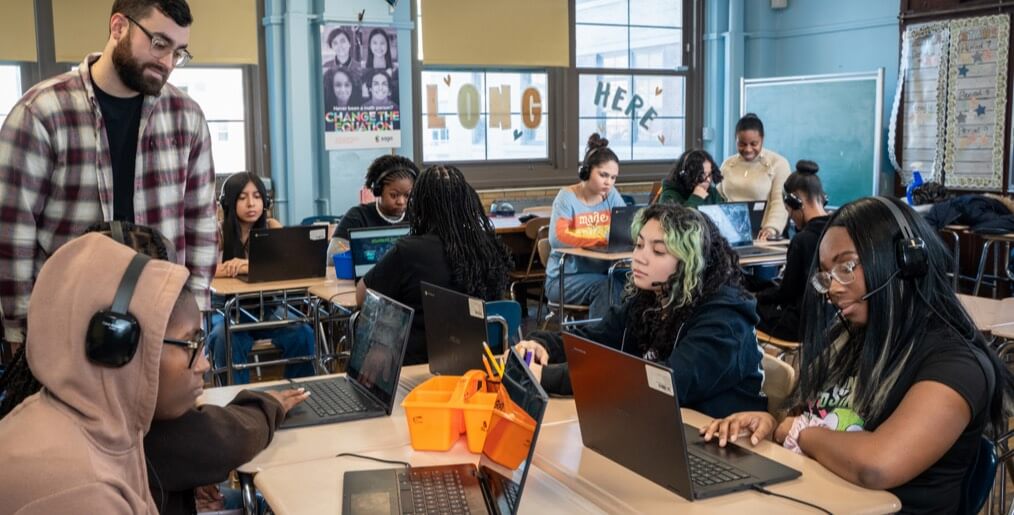
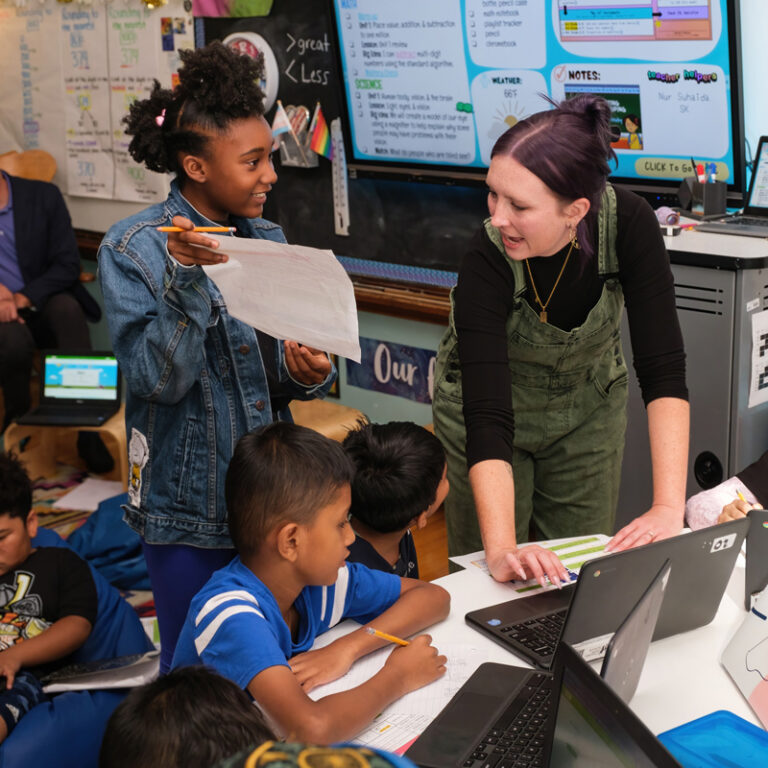
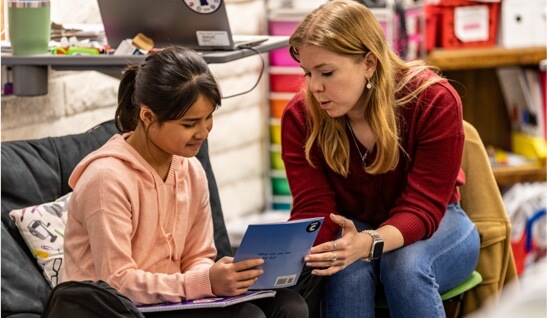
Saga Education tutors work with small groups of students for a minimum of two hours per week, focusing attention on the areas in which students need the most support. The organization also helps districts develop and implement high-quality tutoring models by offering technical assistance and quality assurance, along with learning technology resources.
This growth has been enabled by the expansion of its technical assistance and consultative services, which support 15,000 students through district-led implementations of high-impact tutoring. Research suggests that ninth grade students who participate in Saga’s math tutoring program gain roughly one additional year of math learning per year in the program. In 2025 Overdeck Family Foundation funded a new study of Saga to explore the extent to which these impacts replicate when tutoring is provided in a fully virtual platform. Results are expected in 2026.
Our foundation has played a crucial role in helping Saga scale its impact over the last five years, encouraging the organization to develop a more cost-effective approach that combines small-group tutoring with technology and providing capacity-building support to strengthen its sales strategy at the district level and increase earned revenue. We also co-funded a five-year randomized controlled trial to measure the impact of Saga, in addition to serving as an early backer of Saga’s decision to help districts and states develop their own high-quality tutoring programs.
Over the past five years, Saga Education has increased its reach by 257 percent.
Connecting Home and School To Close the Early Literacy Gap
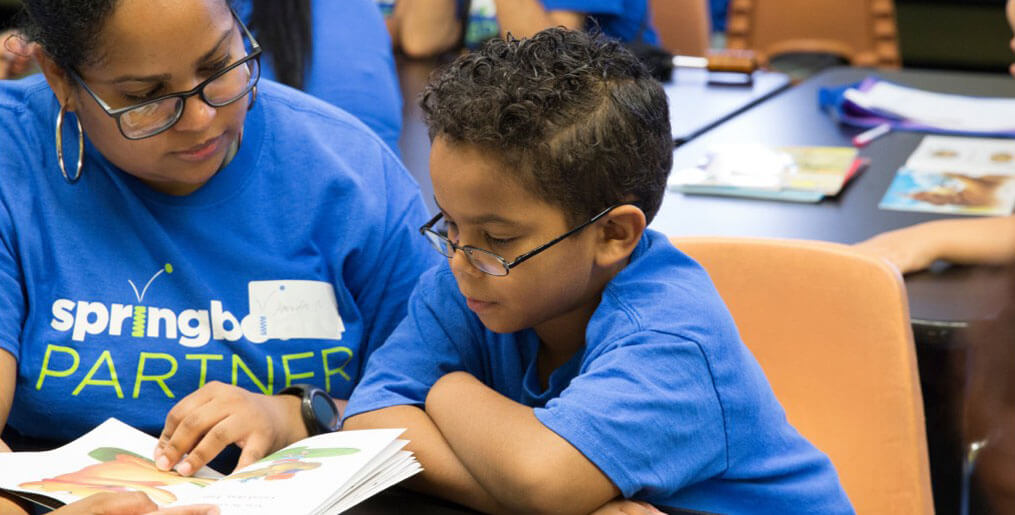
Springboard Collaborative’s methodology, called Family-Educator Learning Accelerators (FELAs), is a five- to 10-week cycle where families and educators work together to help students make up to four-month reading gains.
In response to the pandemic shutting down schools in 2020, Springboard created a train-the-trainer solution, called Springboard Learning Accelerator (SLA), which it implemented virtually to give schools a more flexible, lower-cost solution to effective family engagement. To ensure SLA led to similar impacts as its FELA methodology, Springboard commissioned a national external study, which showed statistically significant reading growth across both program types. Participants in the traditional program averaged 3.1 months of reading growth in summer 2021, while participants in the SLA program achieved a 2.3-month reading gain during the same five-week period, or 74 percent of the impact at 30 percent of the cost.
Building on the early success of SLA, Springboard has continued to innovate on program delivery and cost-effectiveness by reducing the burden on teachers while maintaining strong outcomes. Over the past three years, the organization has streamlined implementation through improved digital tools and infrastructure, including enhancements to its educator-facing Connect app and simplified navigation of program resources. Looking ahead, Springboard is expanding modular product options in response to district demand for lower-cost entry points, such as standalone family workshops, and piloting new offerings, including math programming, expansion into fourth and fifth grades, and integration of Future Forward, a high-impact school-day tutoring model acquired in 2025.
When the COVID-19 pandemic first closed schools, Overdeck Family Foundation provided Springboard with flexible and fast capital that allowed it to create the SLA model and add virtual offerings to its flagship model. Our capacity-building support also helped Springboard in building internal data and research capacity, enabling the team to better understand and communicate the impact of both in-person and virtual models and attract more funding to scale.
Springboard Collaborative’s reach has grown by 19 percent since 2021.
Discover how we’ve helped grantees unlock innovation, evidence, and growth.