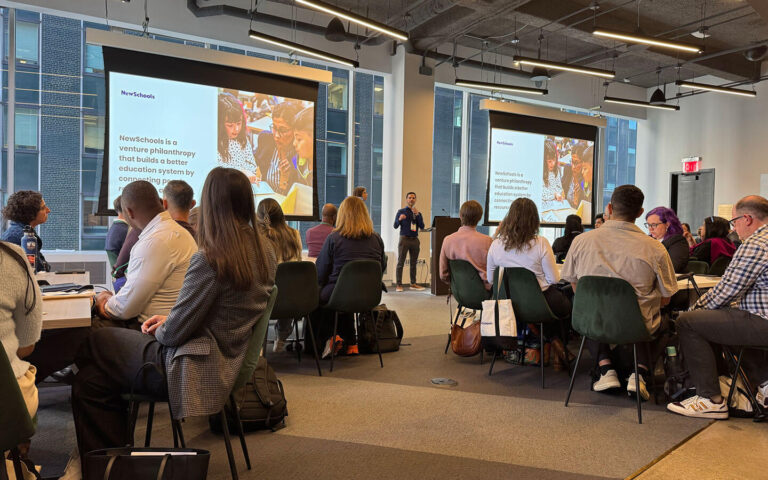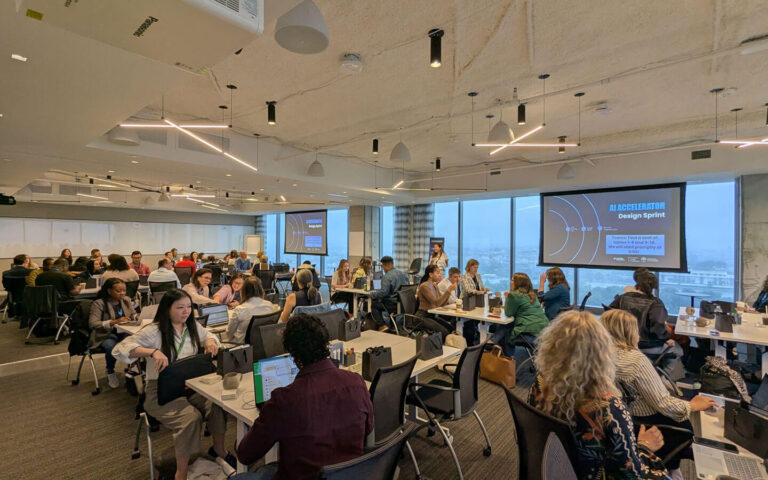





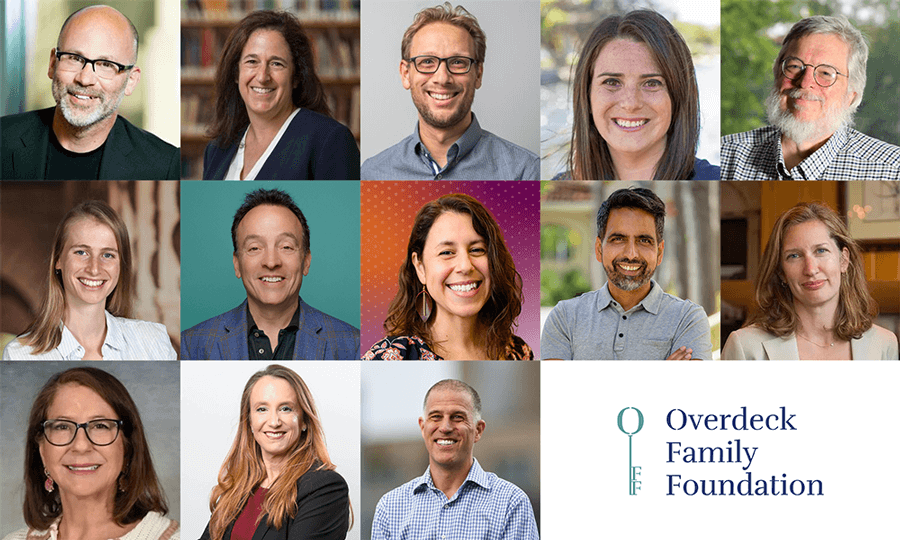
From top left to right: Philip Fisher, Susanna Loeb, Jason Yeatman, Jamie Annunzio Myers, Robert Balfanz, Dora Demszky, Alan Safran, Stacey Alicea, Sal Khan, Robin Lake, Kim Whitten, Jodi Grant, and Eric Hirsch
In Q3 2025, our foundation awarded grants totaling over $10 million.
Our third quarter grantmaking focuses on identifying and fueling the scale of cost-effective programs and solutions that accelerate improvement in key academic and socioemotional outcomes for all children. As always, we place an emphasis on grantmaking and strategic support that unlock innovation, evidence, and growth for our grantees.
Below, we highlighted just some of the direct impact and ecosystem organizations we’re proud to support this quarter.
Unlocking Innovation and Growth (Direct Impact Grantees)
NEW GRANTEES
New to the Innovative Schools portfolio:
- Chapter One, which received a pilot grant of $200,000 over one year. Chapter One offers in-school literacy tutoring that combines daily one-on-one support with technology to improve reading outcomes. It will use the funding to support a second and third grade fluency-focused tutoring model that builds on its kindergarten through first grade program.
- Stanford University’s ROAR (Rapid Online Reading Assessment), which received a pilot grant of $125,000 over one year. ROAR develops fully automated, browser-based reading diagnostics for grades K-12 and will use the funding to scale its low-cost diagnostic tool to 50,000 students by 2026.
RENEWALS AND COMMITMENTS
$2,000,000 (year three of a three-year grant) to Khan Academy to scale its Districts student-facing platform to 996,000 students and drive engagement with Khanmigo, its generative artificial intelligence (genAI) tutor and teaching aid.
$1,500,000 over two years to EdReports to increase its curriculum review capacity, accelerate review timelines, and expand reviews in science and Pre-K. EdReports is currently used by over 1,800 districts across the country.
$1,000,000 (year two of a three-year grant) to Saga Education to continue enabling access to high-impact math tutoring for over 20,000 students, while exploring the potential of AI-enabled training and feedback tools to improve scalability and decrease cost.
$600,000 (year two of a two-year grant) to PBS SoCal to support the Family Math initiative, which reached 2.4 million parents digitally and 10,000 through in-person workshops in year one of the grant.
Unlocking Evidence: RESEARCH and FIELD BUILDING
Ecosystem grants are designed to clear the path to scale for our direct impact grantees and strategies.
To learn more about the impact of AI on teaching and learning:
- $3,000,000 over three years to the Research Partnership for Professional Learning to support research on AI-enabled professional learning. By the end of the grant, we hope to learn which design features and enabling conditions most effectively support high-quality professional learning, to what extent AI-enabled tools can improve teaching and student outcomes, and how tools and infrastructure can accelerate research-to-practice adoption across the field.
- $1,150,000 over two years to Stanford University’s SCALE Initiative to support research and dissemination efforts related to high-impact tutoring and the use of generative AI in education. The National Student Support Accelerator will use the funding to generate practice-relevant research on high-impact tutoring; develop tools and standards to support implementation at scale; and engage and equip education leaders to make evidence-informed decisions. The Generative AI for Education Hub will conduct foundational research, build practical tools, and drive field-wide engagement, including enhancing its AI Research Repository.
- $540,000 over two years to Stanford University’s EduNLP Lab to support three interrelated studies to develop, train, and test AI models that support teachers in providing high-quality, consistent feedback on student writing. These studies aim to see whether AI can effectively improve the timeliness and utility of teachers’ feedback on student writing, and whether this, in turn, improves student writing skills.
- $300,000 over one year to the Center on Reinventing Public Education to expand research on AI early adopters to better understand individual, district, and state AI needs as well as barriers and drivers to adopting new technologies.
$1,000,000 (year two of a two-year grant) to the Afterschool Alliance to support technical assistance to state afterschool networks, awareness around out-of-school time program access and quality, and the release of America After 3PM, the field’s most comprehensive supply-and-demand report.
$240,362 over one year to the Continuous Improvement and Rapid Cycle Learning and Evaluation (CIRCLE) Center at Stanford University to support an external validation study estimating the impact of PBS SoCal’s Family Math program on caregivers’ and children’s math positivity, confidence, and knowledge.
$140,000 over one year to Johns Hopkins University to pilot and test Edvise, an AI-powered early warning and intervention prototype that analyzes complex student data and recommends evidence-backed intervention strategies to increase student attendance rates.