




As states and localities make major investments in public Pre-K programs, the early learning field confronts an urgent question: how can we ensure every young learner has a high-quality early education experience?
The evidence is clear that high-quality early learning supports children’s school readiness and long-term success, but delivering that quality at scale remains challenging, with program quality varying widely across settings.
Our team recently had the chance to wrestle with this question at an early childhood convening in Boston, Massachusetts. The two-day gathering brought together system leaders, program developers, researchers, national early learning organizations, and funders to discuss what it will take to expand high-quality early learning at scale. In addition to a joyful visit to Boston Public Schools Pre-K classrooms, we heard from field experts and explored new curricula, assessments, and technology-enabled tools.
The evidence is clear that high-quality early learning supports children’s school readiness and long-term success, but delivering that quality at scale remains challenging, with program quality varying widely across settings.
Aligned with our foundation’s School Readiness portfolio and research priorities, three key lessons stood out:
High-quality curricula shape what children learn, but the field needs more evidence-backed options.
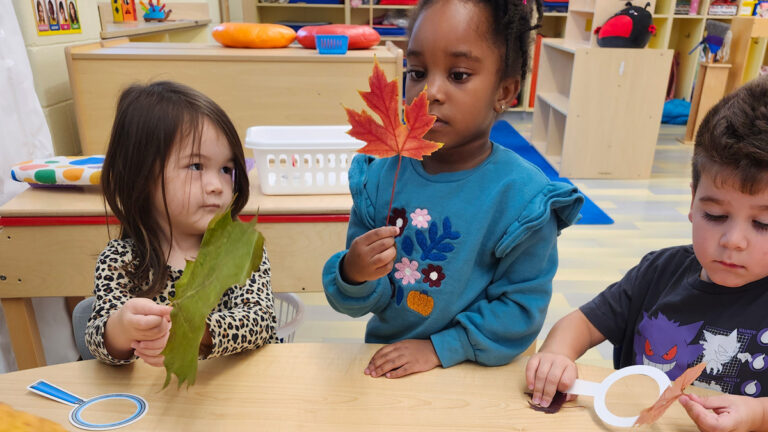
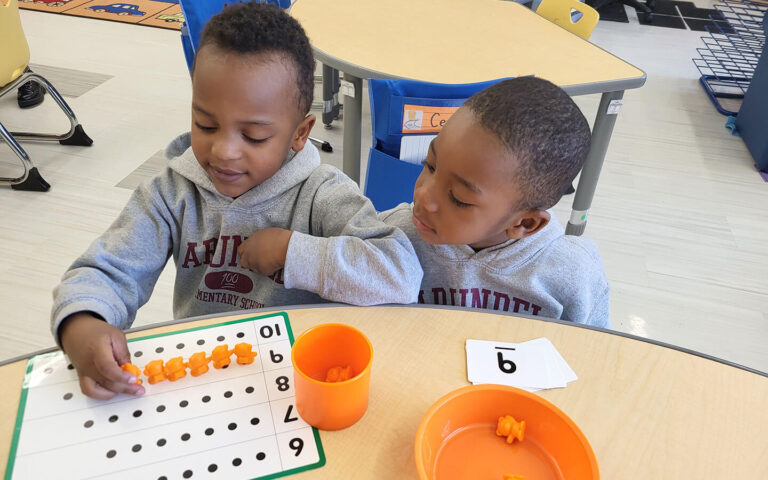
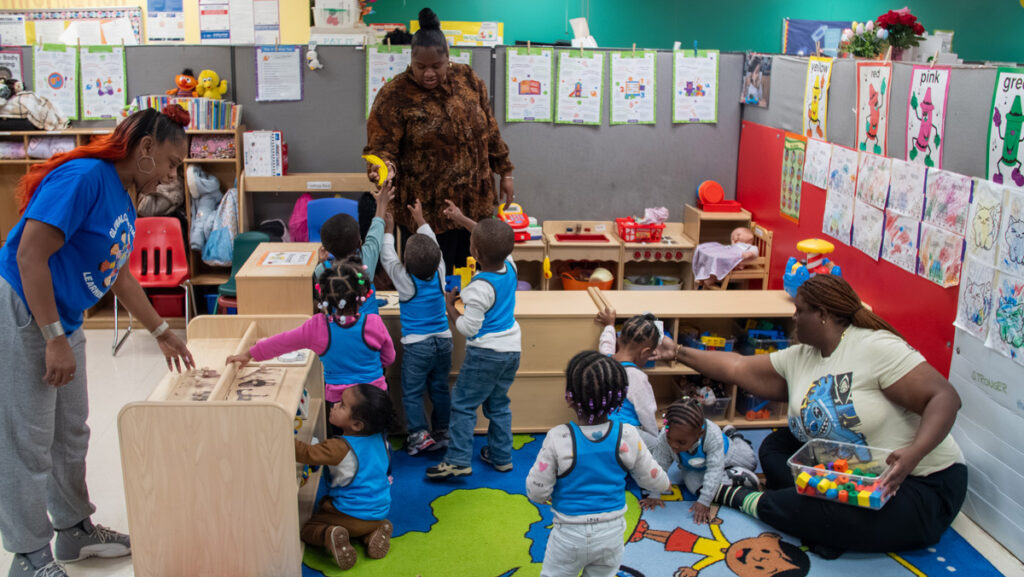
Curriculum is a foundational part of the high-quality Pre-K model we saw in Boston Public Schools classrooms. In one room, four-year-olds gathered around a pretend campfire in a dramatic play area filled with real tree branches and other natural materials. Nearby, classmates planted seeds, carefully counting scoops of soil and sprays of water. Across the room, children drew and painted flowers, labeling parts of the plant. Connected by a shared theme and clear learning goals over time, these activities and the structured instructional materials that guide them gave children opportunities to practice foundational language, math, science, creativity, and social-emotional skills through purposeful play.
Following the site visit, Dr. Meghan McCormick, senior research and impact officer at Overdeck Family Foundation, presented alongside Dr. Christina Weiland of the University of Michigan on the state of evidence of Pre-K curriculum, drawing on key lessons from the 2024 National Academies of Sciences, Engineering, and Medicine consensus report. The report highlights several common features of high-quality Pre-K curricula:
- A clear scope and sequence that outlines the skills children will be taught and how concepts will build over time;
- Alignment with early learning standards and the science of learning and development; and
- Active, engaging, and joyful learning experiences that give children meaningful opportunities to engage with content and practice skills.
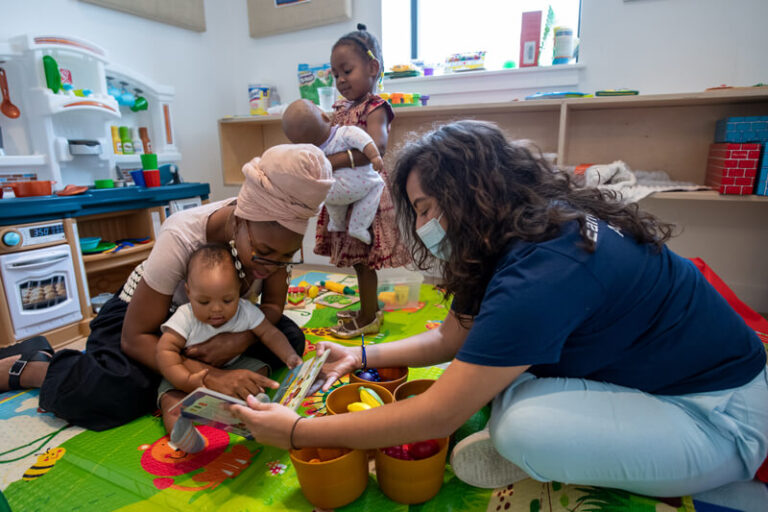
Discussions following the presentation highlighted that the diversity of today’s Pre-K landscape means that any one curricular product is unlikely to meet the needs of every setting. Families across the U.S. rely on Pre-K programs in public schools, community-based organizations, and family homes and educators across these settings have different levels of training, planning time, and ongoing instructional support. Programs also serve children with different home languages, cultural backgrounds, and prior learning experiences.
There was consensus that the field needs a stronger bench of options grounded in the core principles outlined in the National Academies report to offer enough flexibility to work across these settings. EdReports’ first Pre-K curriculum reviews, released during the event, mark a key step toward a stronger curriculum marketplace. The initial reviews also make clear that there’s more work ahead: improving existing tools, expanding the range of high-quality options, and building rigorous evidence on whether these curricula can improve outcomes for young learners.
This is central to our work. Our School Readiness portfolio aims to strengthen Pre-K instruction by supporting high-quality, joyful, and rigorous instructional models, while helping build evidence on what works in real-world settings. At the convening, grantee partners Every Child Ready, HighScope, and Tools of the Mind spoke about their efforts to expand the availability of high-quality curricula, while engaging in evidence-building efforts to better understand how to improve outcomes for young children at scale.
Regardless of curricula quality, implementation is key.
Practitioners attending the convening emphasized that selecting strong instructional materials is only the first step. Curricula improve Pre-K quality only when they influence what educators do with their students every day. Boston Public Schools educators shared the robust implementation supports that are needed to drive quality curricular implementation: ongoing coaching, instructional alignment across grades, and regular opportunities for educators to reflect on and adjust their instruction.
This approach aligns with evidence from the field that underscores high-quality curricula paired with aligned professional learning as the “strongest hope” path for improving quality. A robust evidence base suggests that the most promising professional learning tends to be tailored, sustained, and connected to what teachers are doing in the classroom and the curricula they have. For example, a meta-analysis of Pre-K professional learning studies found that coaching models that provide repeated, practice-based support have three times the impact on quality of other professional learning programs.
But the intensive coaching models that are commonplace in K-12 can be hard to scale across Pre-K programs. Many early learning programs operate with tight budgets, limited planning time, and staffing challenges. That’s why we invest in program models and research to better identify how to scale coaching across the diverse early learning landscape. This includes support for researchers at the University of Michigan exploring whether AI-based methods can help identify high-quality instructional practices more quickly, as well as investments in LENA Grow and Stanford FIND, coaching models that capture educator-child interactions via audio or video to help teachers reflect, set goals, and strengthen the supportive, responsive practices that matter for young children’s development.

Courtesy of Tools of the Mind
Data is essential for understanding what’s working, for whom, and under what conditions.
The convening also highlighted promising efforts to build better data and assessment systems for early learning—from statewide data collection efforts in Virginia to new Pre-K-specific assessment tools from nonprofit organizations like Khan Academy Kids. Too often, Pre-K programs make decisions about instructional materials and supports with limited insight into what is happening inside classrooms. Without good information on curriculum implementation, program quality, and child outcomes, it’s hard to know what’s working, where help is needed, and when to make adjustments.
Better data can help the field move faster and learn more. It can support rapid-cycle pilots to understand whether new instructional materials or professional learning supports are working, help systems monitor implementation over time, and make it easier to target supports where they are most needed. Attendees agreed that the purpose of data collection is to ultimately create better information that helps families, educators, program leaders, policymakers, and funders make stronger decisions, so more children are ready for elementary school and beyond.
Several Overdeck Family Foundation grantees already take this approach to data collection and analysis. For example, LENA Grow’s classroom-level data can be aggregated across a center, system, or state to support systemic changes to strengthen the quality of children’s language environments, even for classrooms not participating in the program. We’re also funding systems-level data collection and analysis work to better understand trends in children’s kindergarten readiness across states and communities. Together, these efforts can help the field answer not only whether an approach works, but for whom and under what conditions, as well as what it takes to implement well at scale.
From Convening to Action
Every day, educators in places like Boston are bringing the promise of Pre-K to life by shaping what children do and how they learn. But to ensure more children have high-quality early learning experiences that prepare them for kindergarten and beyond, it’s not enough to just provide access to Pre-K. The early childhood sector needs to invest in developing additional instructional models grounded in what we know about child development, supporting educators to use those models well, and building evidence and data systems that make it simpler to test and analyze those models in real-world settings.