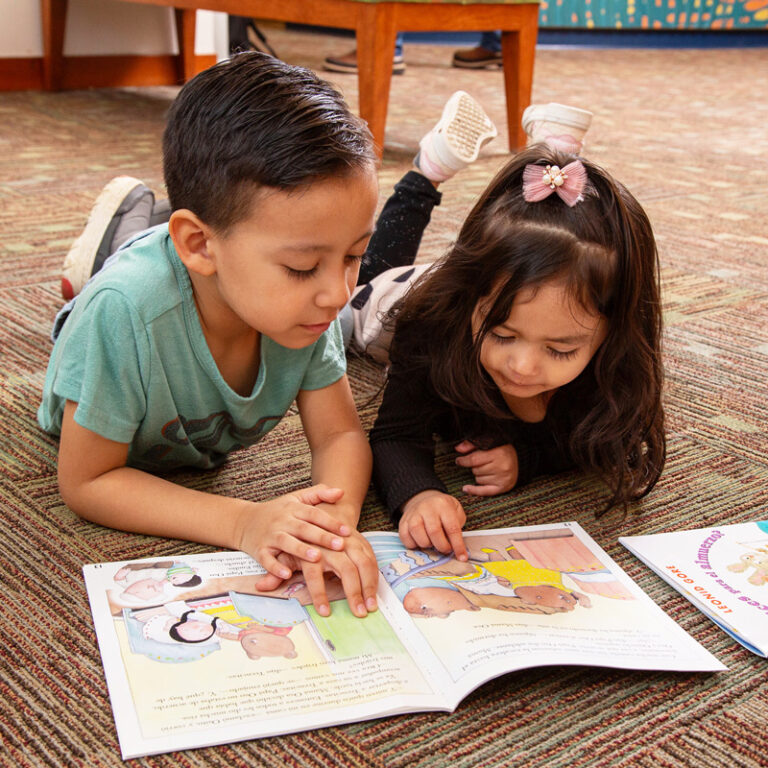




The word “assessment” often evokes an image of students sitting down with pencil and paper to fill in bubbles or, more recently, sitting in front of a computer to respond to a set of questions. But advances in technology are beginning to reshape both what assessment looks like and the types of insights it can provide about student learning beyond progress on skills in core academic subjects.
New digital platforms, simulations, speech and video analysis, and AI-enabled tools are expanding our ability to capture learning as it happens, providing information not only about whether students get a correct answer, but also about the strategies they use, their response to feedback, how they communicate, and whether they work well with others.
These approaches make it more feasible to assess future-ready skills like cognition, connection, agency, and problem-solving, competencies that are increasingly seen as critical to future success in a rapidly changing world. Across all stages of schooling, these skills support students’ ability to learn, work effectively with others, and successfully navigate school, work, and life. Educators, families, employers, and students are increasingly recognizing their importance. For example, 26 states have adopted a Portrait of a Graduate that names the academic, technical, and durable skills they believe students need to be successful.
Yet future-ready skills are rarely measured, making it difficult to identify opportunities to strengthen them. These skills are often harder to capture than many academic outcomes because they do not have a single right or wrong answer, and the stand-alone surveys or tests traditionally used to assess them add burden for students and educators.
Technology-enabled approaches may address both challenges, making these skills more visible by responsibly using data generated during activities already underway. In doing so, they may also reduce the time devoted to data collection and free up more space for learning and meaningful interactions that build these critical skills.
Aligned with our Future Readiness portfolio, Overdeck Family Foundation is supporting several projects that use technology to rethink how information on future-ready skills is collected, interpreted, and used—potentially unlocking key insights into the learning experiences that best promote these skills and set students up for success.
While much of this work is still emerging, these projects point to three early lessons.
1. Data from digital learning activities can capture how children approach learning without adding new assessments.
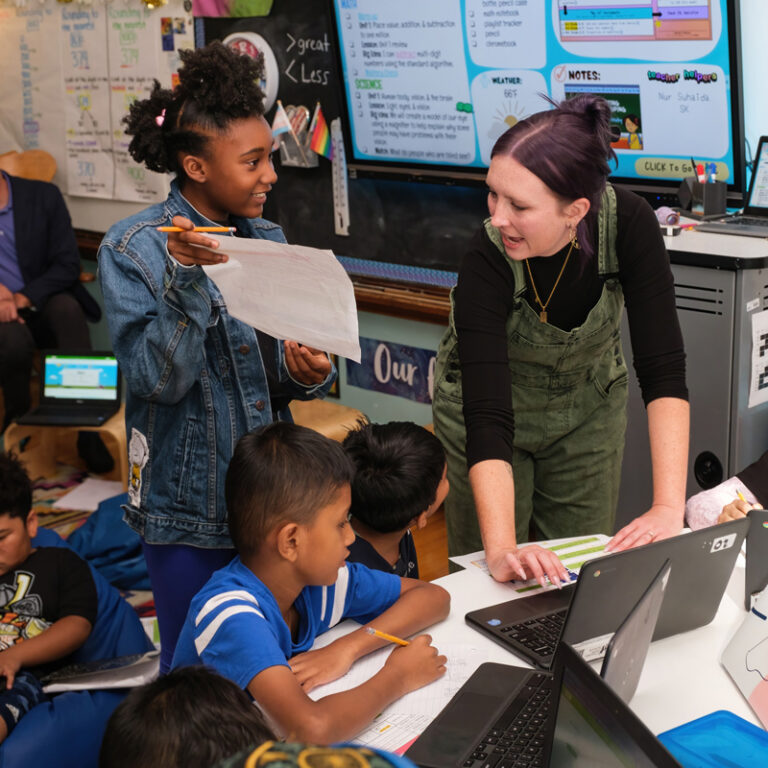
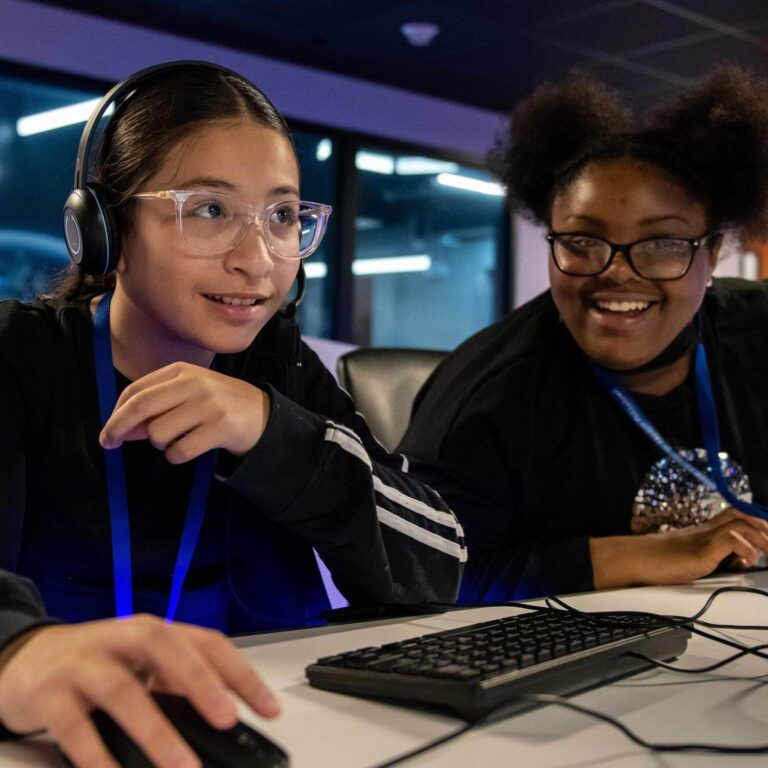
Today, 80 percent of K-12 classrooms across the U.S. use computers or tablets. These platforms typically gather metadata—information about how children interact with the platform, such as completion patterns, revisions, use of hints, and the sequence of actions they take. Rather than adding another survey or testing session, these data points may help educators understand not only what students have learned, but how they are learning and engaging.
As part of the Urban Institute’s Student Upward Mobility Initiative (SUMI), researchers at MDRC considered whether metadata automatically collected as preschoolers engaged with digital activities could provide a low-burden indicator of executive functioning—the cognitive processes that help children hold information in their minds, control impulses, and sustain attention. The researchers hypothesized that rapidly clicking through activities or exiting before completing an activity might indicate children struggling to focus or suppressing competing impulses. In line with this hypothesis, several indicators based on response times and activity completion were positively associated with established measures of executive functioning.
These initial findings suggest that data already generated through digital activities may provide useful signals of children’s executive functioning without requiring a separate assessment. They underscore the potential for assessment to become more embedded in children’s day-to-day experiences and less burdensome for children and educators.
When collected transparently and responsibly, data collection approaches like this may also make it possible to observe patterns over time, rather than relying on a single testing window. A newly funded SUMI project will explore whether data collected during students’ interactions with artificial intelligence (AI) tools can similarly be used to measure foundational skills that matter for longer-term success.
2. Technology can capture students’ thinking, learning, and collaboration as they unfold.
Other advances in technology expand the aspects of student learning that can be directly observed. Innovations such as automated speech recognition, large language models, and simulations can capture students’ explanations, reasoning, and interactions with peers—aspects of learning that are difficult to capture in real time through surveys or stand-alone assessment tasks.
Researchers at the Harvard Graduate School of Education, for example, are using large language models to analyze young children’s spoken responses to AI-generated questions delivered as they watch science, technology, engineering, and math (STEM)-related media. Rather than scoring only whether an answer is correct, the approach examines the content and richness of children’s language and potentially sheds light on their reasoning, inquiry, and motivation.
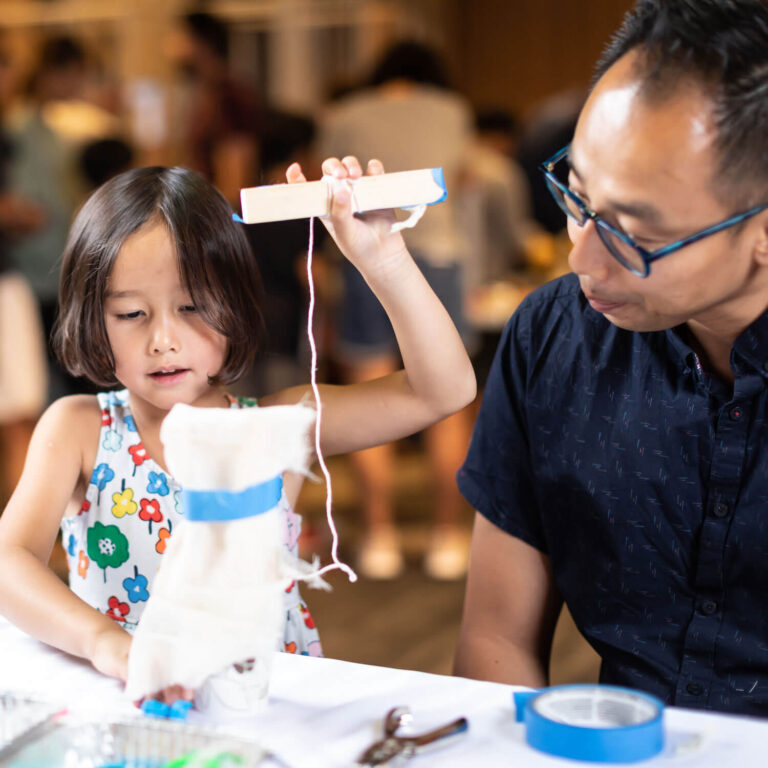
Technology can also capture learning that occurs between students. Our foundation has made recent investments in OKO Labs and PeerTeach to better understand whether these tools can accurately capture students’ communication and collaboration skills as they explain mathematical ideas and respond to classmates. These approaches may make it more feasible to assess skills such as communication, collaboration, and problem-solving in the settings where students naturally use them.
Together, these examples move assessment beyond isolated responses from individual students. They offer a broader view of learning by capturing not only what students know, but also how they express, apply, and develop that knowledge through authentic activities and interactions, which stakeholders of all kinds—teachers, parents, students, and even future employers—agree is increasingly important.
3. More evidence is needed to ensure novel measures are accurate and actionable.
Just as with traditional assessments, it’s critical to build evidence on these new approaches before they inform decision-making. This starts with the quality of the underlying data.
Speech-based measures, for instance, need to first demonstrate that the technology is accurately capturing what children actually say. Young children’s speech can be especially difficult for automated systems to transcribe, and classroom conditions add further complexity as students speak quietly, interrupt one another, or talk over background noise. These challenges can reduce transcription accuracy. Automated speech recognition models have error rates that are four to eight times higher for children than adults, making conclusions drawn from these data potentially unreliable.
Clarity about the construct being measured is also important to determine whether an assessment reflects the intended skill and whether the resulting evidence can be meaningfully interpreted. Shared frameworks, such as the Skills for the Future Initiative from ETS, offer a useful starting point for establishing a common understanding of skills like collaboration, communication, and critical thinking.
Once there is confidence in the accuracy of the data and what they represent, the next question is whether the resulting information can be translated into useful, actionable insights. The value of a novel measurement depends on whether researchers, providers, and educators can access and interpret the results, connect them to appropriate next steps, and use these insights to strengthen teaching and learning.
The projects described here reflect early efforts to define important skills more clearly, validate new sources of evidence, and connect richer measures to meaningful actions and outcomes. The goal is not simply to collect more data. It is to generate meaningful insights that help us see more of how students learn and better support their development in areas that have been harder to measure but are more important than ever before.
As our team continues to invest in innovative approaches to build and measure future-readiness skills, we remain dedicated to transparently sharing our learnings with the field and invite other funders and partners to join us in these efforts by reaching out to research@overdeck.org.