



How do we prepare students for jobs, technologies, and challenges that do not yet exist? Increasingly, educators are answering this by looking beyond academic achievement, examining how schools and out-of-school programs can help students build essential skills such as critical thinking, problem-solving, collaboration, communication, and agency to navigate a tech-driven, uncertain future.
Science, technology, engineering, and mathematics (STEM) learning is emerging as one promising approach. Across classrooms, afterschool programs, museums, summer programs, and community organizations, students nationwide are building, designing, coding, inventing, competing, and solving real-world problems through hands-on STEM experiences intended to make learning more fun, active, and engaging.
But joyful STEM is not always rigorous STEM. The key question is whether these experiences, in addition to being fun, can deepen students’ STEM knowledge, strengthen future-ready skills like problem-solving and collaboration, and expand educational and career pathways.
A growing body of research suggests that they can, especially when they are intentionally designed, well implemented, and connected to clear learning goals. Three lessons stand out from the current and ongoing research.
1. Joyful STEM programming can improve student learning outcomes and future-ready skills
There’s growing, consistent evidence that STEM programs are more than fun for students—they can measurably improve both academic and non-academic outcomes. Three meta-analyses published in the last two years help illustrate this broader pattern.
In the first meta-analysis of STEM interventions, which examined 66 experimental and quasi-experimental studies published between 2000 and 2024, researchers found moderate-sized effects on both cognitive abilities measured through standardized assessments and non-cognitive outcomes such as STEM interest and self-efficacy.
Other research points to benefits for additional future-ready skills. The second meta-analysis examined STEM project-based learning models and found consistent evidence that participation was associated with improvements in student creativity, which enhances critical thinking and conceptual understanding.
In the third meta-analysis published this year, researchers reviewed 124 studies and found that well-designed STEM experiences improved students’ STEM knowledge and higher-order cognitive skills, with additional gains in problem-solving when paired with instructional approaches such as inquiry-based learning and engineering design.
Taken together, these findings suggest that high-quality STEM learning can support both academic achievement and broader future-ready skills.
Joyful STEM is not always rigorous STEM. The key question is whether these experiences, in addition to being fun, can deepen students’ STEM knowledge, strengthen future-ready skills like problem-solving and collaboration, and expand educational and career pathways.
2. Access to STEM programming alone is not enough to move outcomes
Critically, however, the evidence also shows that quality matters. Programs with the strongest outcomes tend to feature well-designed curricula, clear learning goals, opportunities for students to engage in authentic inquiry and engineering design, and instructional supports that help educators with effective implementation.
This distinction matters because many STEM experiences are engaging, fun, and joyful, but not necessarily academically rigorous. Students may enjoy building, tinkering, competing, or playing, but unless those activities are intentionally connected to learning goals, they may not deepen STEM understanding, ultimately failing to boost students’ cognitive and future-ready outcomes.
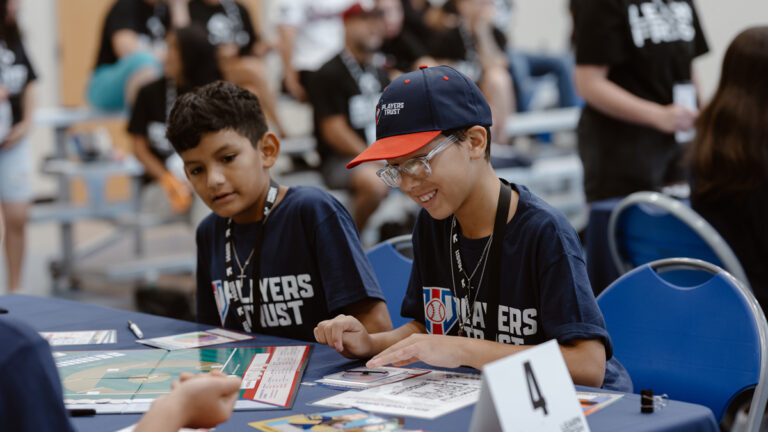
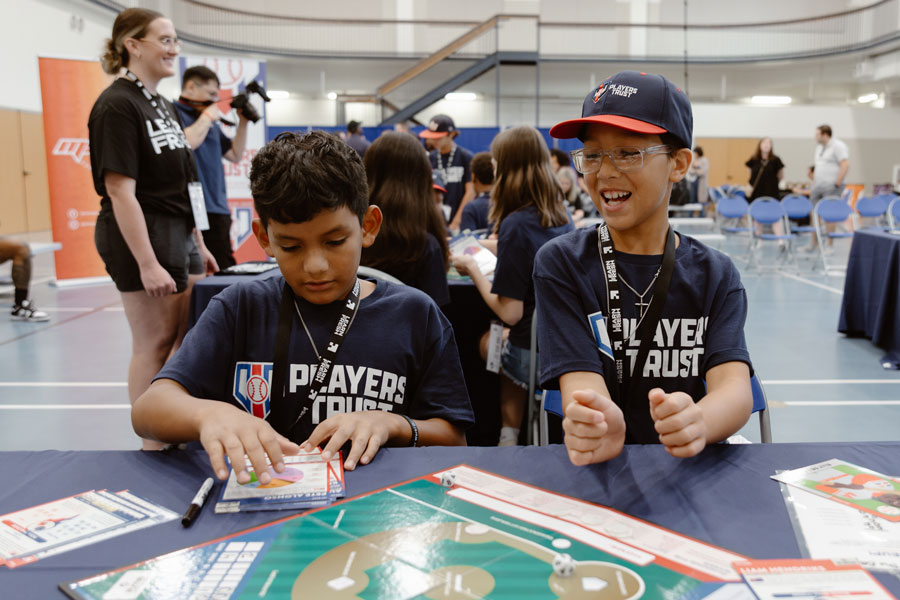
Our foundation is using this emerging field-level evidence to make new investments in impactful, joyful, and rigorous STEM programming, in addition to funding research that helps identify which approaches are able to move the needle on student outcomes. For example, researchers from WestEd recently completed a randomized controlled trial (RCT) of Learn Fresh’s NBA Math Hoops program, developed in partnership with the NBA and WNBA. The program uses an interactive board game and lessons built around real player statistics to help students build skills in arithmetic, fractions, decimals, percentages, data analysis, critical thinking, problem-solving, and collaboration.
In a two-year randomized controlled trial of 256 rising fourth through sixth graders participating in an NBA Math Hoops summer enrichment program in Jackson, Mississippi, students assigned to NBA Math Hoops scored 0.19 standard deviations higher in math achievement than their peers in comparison STEM programs—equivalent to an eight-percentile-point gain for a student starting at the 50th percentile. Researchers also found the program was easy to implement, cost-effective to deliver, and fostered strong engagement.
A similar pattern emerges in research on the Museum of Science’s Engineering is Elementary (EiE) program, an elementary engineering curriculum that uses structured design challenges to help students connect engineering practices with science content. In a large cluster RCT across 604 classrooms in 152 schools, students assigned to EiE outperformed comparison students on both engineering and science outcomes, with impacts of 0.34 standard deviations in engineering and 0.53 standard deviations in science. As an RCT, this study provides strong causal evidence that intentionally designed engineering curricula can improve elementary students’ STEM learning outcomes.
Project Lead The Way (PLTW) offers another example at the high school level. PLTW is an applied STEM career and technical education program that provides rigorous, project-based coursework in engineering, computer science, and biomedical science. A rigorous quasi-experimental study in Missouri found that PLTW participation increased students’ likelihood of declaring a STEM major in college by roughly five to 10 percentage points, with the strongest evidence for students who entered high school with higher STEM preparation.
Taken together, these studies suggest that joyful STEM experiences can move student outcomes when they are intentionally designed, well-implemented, and connected to clear learning goals. What we know less about is whether these types of evidence-based programs can consistently shift future-ready outcomes such as critical thinking, problem-solving, and agency. Further research is also needed to understand whether they can boost longer-term outcomes for all students, especially those who enter with weaker STEM preparation or have less access to sustained, high-quality STEM opportunities.
Courtesy of Learn Fresh
3. Better evidence is needed to identify and scale effective STEM learning that builds future-ready skills
The evidence to date highlights a further challenge for the field: We have rigorous evidence on a handful of scalable STEM programs and practices, but far less on the many rich learning experiences students encounter every day, in addition to a limited ability to identify what works quickly enough to keep pace with innovation.
This is particularly salient given the pace of change. Schools and communities are rapidly adopting new approaches to STEM learning, but research often takes years to generate actionable findings. To keep pace, the field needs faster and more scalable ways to identify which active and engaging learning experiences are truly improving outcomes for students. There is also a need for more evidence on STEM programs that are integrated into the school day and can reach large numbers of students, not just those who opt in to enrichment opportunities.
Measuring future-ready outcomes, versus academic ones, presents a unique challenge as traditional assessments were designed to capture academic knowledge, not competencies such as collaboration or creativity. That’s why we’re investing in a number of emerging efforts, including ETS’s Skills for the Future initiative, which is dedicated to exploring new approaches to measuring these capabilities through authentic tasks, digital interactions, and other forms of real-time assessment. This approach could help researchers and educators better understand whether STEM experiences are developing not only academic skills, but the durable skills that matter most for students’ future success.
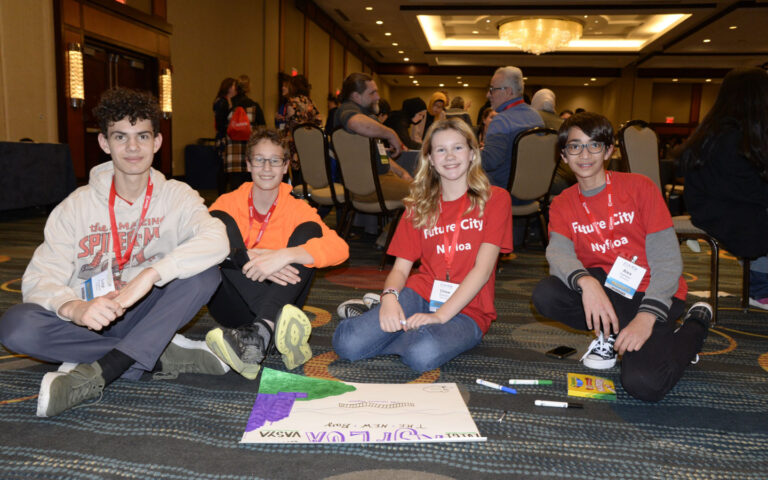
In addition to the NBA Math Hoops evaluation, we’re funding studies of DiscoverE’s Future City Competition, Challenger Center, the Museum of Science’s Youth Engineering Solutions, and the National Inventors Hall of Fame’s Club Invention. In addition, we’re funding a study of OpenSciEd, which will allow us to understand the impact of a high-quality science curriculum on students in school, versus on those who select into STEM experiences. The quasi-experimental study, conducted by WestEd, will estimate the impact of OpenSciEd on students’ science achievement and future-ready skills, including critical thinking and problem solving. These findings will also help the field understand the value of in-school curricular models for preparing students for a rapidly changing world.
Together, this research base seeks to identify what kinds of STEM experiences are most effective at improving student outcomes and developing future-ready skills across a range of in-school, afterschool, and informal learning environments. As new technologies create opportunities for more personalized, engaging, and interactive learning experiences, we need stronger evidence not only about whether students enjoy these experiences, but about which approaches produce meaningful gains in learning and future-ready skills, for whom, and under what conditions.
To stay up-to-date on the latest news from our Foundation, subscribe to our newsletter and explore the findings from our latest research grants in our Research Repository.