





At the end of each year, the research team at Overdeck Family Foundation highlights a handful of new research studies that have not only shaped our thinking, but are also helping inform investments going forward (read last year’s round-up of five studies).
This year, the set of studies we’ve selected provided timely evidence for untested but widely endorsed hypotheses, showcased how integrating evidence-building into product design can significantly strengthen outcomes, and used data to identify opportunities for policymaking that improves children’s outcomes. While the topics explored in these studies do not represent the full breadth of our grantmaking priorities, they’re illustrative of research that our team found interesting and thought-provoking. The findings from these five studies are summarized below:
1. Investments in high-quality Pre-K yield long-term impacts
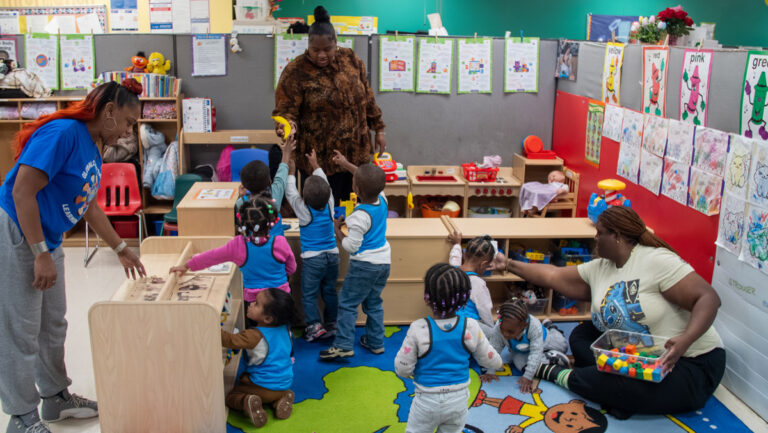
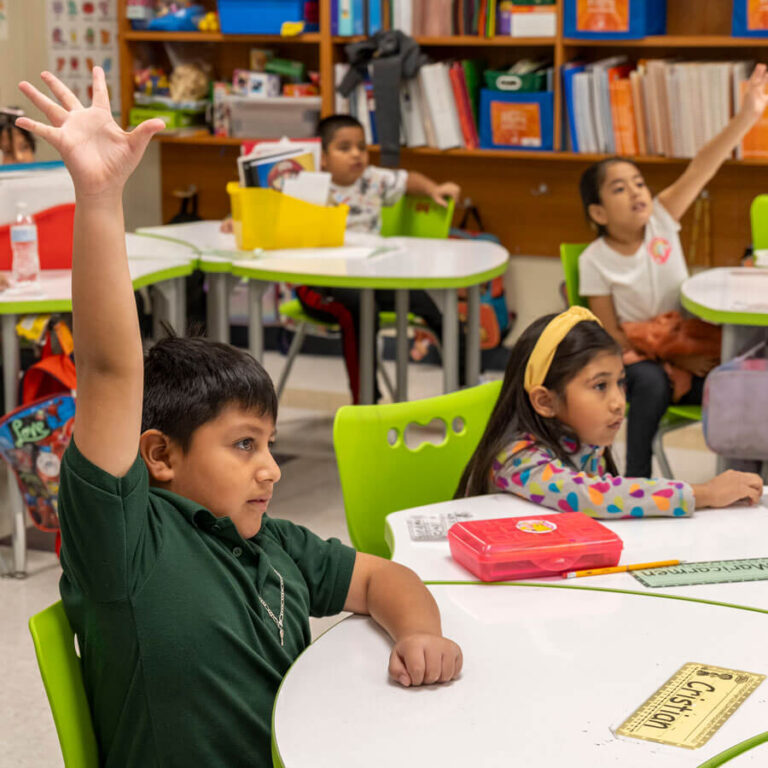
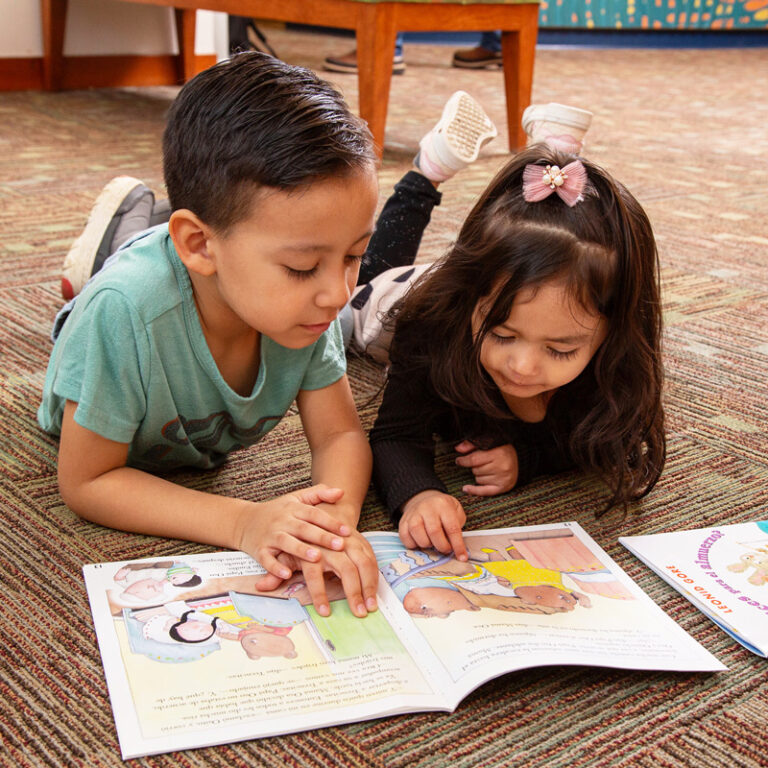
Our investments in early childhood are built on decades of evidence suggesting that high-quality early learning experiences boost kindergarten readiness and set children up for lifelong success. Yet, results from recent studies of public Pre-K programs have been less compelling than older research, with some finding that initial impacts of Pre-K programs on academic skills, typically measured with direct assessments and standardized tests, rarely persist beyond the start of kindergarten. A key limitation and critique of these studies, however, is that recently studied state and district Pre-K programs are not of sufficient quality to yield lasting impact.
Results from a long-term study of the Boston Public Schools (BPS) Pre-K program published this year and conducted by Christina Weiland, Becky Unterman, and colleagues from the University of Michigan and RAND, provide rigorous evidence that early learning quality does matter. Using a rigorous design that took advantage of natural lotteries to approximate random assignment, the research team found that participating in the BPS Pre-K program, which combines content-rich, evidence-based curricula with strong coaching for teachers to support implementation, increased math achievement in seventh grade by about .24 standard deviations, decreased children’s likelihood of being suspended in seventh grade by about eight percentage points, and increased children’s likelihood of taking and passing Algebra I in eighth grade by 23 percentage points. A less rigorous matching analysis that included the full population of BPS students, including those who did not apply to oversubscribed lottery schools, found small but lasting impacts on reading and math standardized test scores from third to seventh grade.
This study reinforces our belief that the quality of Pre-K, or what children experience and how well it is delivered, matters as much as, and often more, than access alone. And even when academic test score gains fade, high-quality programs can shape policy-relevant outcomes that can serve as predictors of later success. As our early childhood team looks to 2026, we remain focused on making investments that recognize the importance of high-quality early learning environments for children’s development and school readiness. The evidence consistently points to the importance of adopting content-rich curriculum, professional learning to support strong implementation, and assessments to guide and personalize instruction to maximize the quality of Pre-K settings. Making these investments can help ensure that the foundations children build in Pre-K translate into enduring advantages throughout their educational journey.
The evidence consistently points to the importance of adopting content-rich curriculum, professional learning to support strong implementation, and assessments to guide and personalize instruction to maximize the quality of Pre-K settings.
2. Instructional coherence—using aligned materials in core and supplemental instruction—measurably boosts students’ academic achievement
The education sector has long hypothesized that instructional coherence—ensuring that components like curricula and assessment align with both core and supplemental instruction—is critical to maximizing student learning. However, there has been somewhat limited experimental research to date definitively proving that instructional coherence matters.
That’s why we were excited this fall when researchers Cara Jackson and Ayman Shakeel released results from a randomized controlled trial (RCT) that rigorously tested the impact of tutoring explicitly aligned with core curriculum, compared with tutoring not directly connected to curriculum. The researchers found that when tutoring content reflected what students were learning in class, and when teachers viewed it as reinforcing (rather than replacing) their instruction, students performed 0.12 SDs higher on an assessment of literacy achievement, corresponding to about 1.3 more months of learning, than peers in unaligned tutoring settings. Implementation data from this study were particularly revealing. Misalignment between the core curriculum and the tutoring program contributed to scheduling difficulties, lower dosage, weaker teacher buy-in, and diminished impact.
Though limited to curriculum and tutoring, the core findings from this study reinforce our belief that instructional components cannot operate in a vacuum: they must sit within an aligned system where each component reinforces and supports the others. It also builds our confidence in the potential for future investments in instructional coherence, extending to include the full suite of aligned curriculum, professional learning, assessment, and tutoring, to yield measurable impact on student achievement, a hypothesis we will be increasingly pressure-testing in 2026 and beyond.
3. Rigorous, rapid-cycle study designs, made possible by technological innovations, can quickly identify the most impactful and cost-effective features of education programs
One of the most visionary studies we encountered this year came from Noam Angrist, Claire Cullen, and Janica Magat, who ran twelve rapid-cycle randomized A/B tests to optimize a mobile-phone-enabled tutoring model in the context of Botswana. The goal of the work was not just to improve the usability and feasibility of the tutoring intervention, but to make continued modifications to both reduce cost and increase effectiveness so that an improved version of the model would be best set up to maximize impact on student learning at the lowest possible price point.
Notably, all of the cost-saving tests did work; the team was able to streamline implementation by improving scheduling and reducing costs while maintaining impact on learning outcomes. The tests to improve effectiveness were more mixed, which was a key learning of the project. The modifications made to improve parent engagement, by actively encouraging parents to lead the second half of the tutoring session, were by far the most effective, doubling the impact on student learning. Other tested modifications, like including tech-based learning supports and resources and sending out motivational nudges to practice, were not effective at boosting impact.
This study reinforces a key component of our work and ethos: regardless of the type of intervention, innovation is best when it’s paired with low-cost iterative testing, measurement, and improvement targeted at student outcomes. This research team showed that not only is it possible to do this work well and transparently report on successes and failures, but also that new technologies make it possible to do this work quickly. We’re excited to experiment with more agile research tools and methodologies in 2026 while continuing to support grantees that embed rapid-cycle measurement, continuous improvement practices, and rigorous and transparent experimentation into their models.
Regardless of the type of intervention, innovation is best when it’s paired with low-cost iterative testing, measurement, and improvement targeted at student outcomes.
4. Questions remain about the most effective way to improve student learning experiences and academic engagement, but emerging evidence suggests that in-school cell phone bans can help
Over the past three years, our foundation has made significant investments in efforts to reduce chronic absenteeism, which is still hovering at 22 percent nationally, and to identify strategies that help improve student engagement. Researchers, policymakers, and educators alike have argued that students’ in-school use of cell phones and social media is perhaps the key culprit negatively affecting attendance, engagement, and, ultimately, achievement. However, critics of this theory counter that the evidence base for this assertion is fairly weak.
In 2025, new studies exploring the impact of cell phone bans in schools started emerging. Perhaps the most rigorous is a new working paper by David Figlio and Umet Özek estimating the impact of Florida’s statewide bell-to-bell cell phone ban on student achievement and related outcomes. Using a quasi-experimental methodology, the study found that the ban did have a small positive impact of 1.1 percentile points on students’ standardized test scores after two years of implementation, with most of that seen in middle and high school students. Critical to our work in addressing absenteeism, much of this gain appears to be a function of improvements in attendance: unexcused absences dropped significantly and accounted for nearly half of the test score improvement among older students.
This study helps point to the small potential benefits of limiting cell phone use in schools. But it also finds that banning cell phones is not a silver bullet to improving reading and math achievement. Questions continue to remain about whether cell phone bans can help students become more engaged in learning, more focused on developing positive social relationships in school, and less phone-centric during out-of-school time. More broadly, questions remain as to the underlying root causes of student disengagement and what can be done to address them.
This year, we funded the States Leading States Initiative at Harvard University to conduct further research on cell phone use in school across four states, which would explore a set of policies versus total bans. The study will also estimate the impacts of specific policies on students’ academic and behavioral engagement, in addition to attendance and achievement. We expect that the findings will help inform state and district decision-making and build the field’s understanding of which types of technology policies set a foundation for school success.
5. Emerging data on children’s use of technology and AI underscore the need to better understand how to maximize benefits and reduce harms, both in and out of school
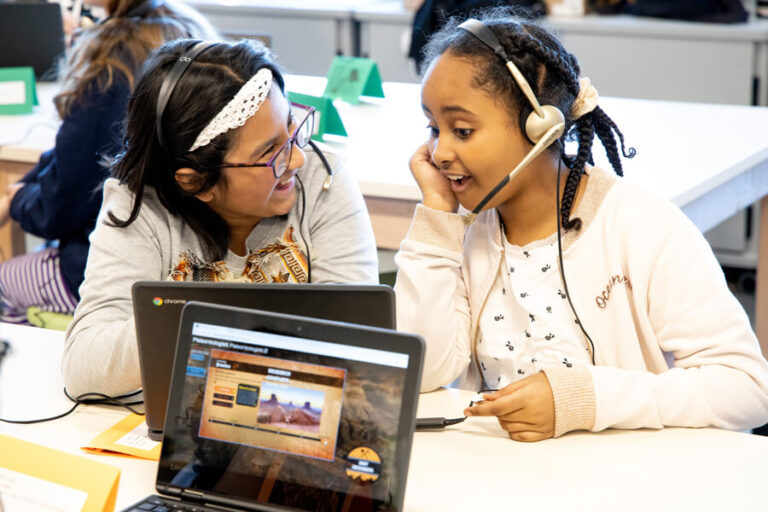
We’ve seen exciting emerging evidence that generative artificial intelligence (genAI) has the potential to make educational tools more impactful, scalable, and cost-effective, especially when it comes to improving educator practice. We’re continuing to learn more by investing in additional research and genAI-enabled innovations across Pre-K through ninth grade. But we’ve also seen evidence that children are using genAI outside of school in ways that are more unexpected and show potential to negatively impact their development.
A nationally representative survey from Common Sense Media and NORC at the University of Chicago found that 72 percent of teens reported using AI companion tools such as character bots or emotionally supportive chatbots, and 52 percent said they use them regularly. One-third of teens used these tools for social or emotional connection, and 31 percent said conversations with AI were as satisfying as, or more satisfying than, conversations with real friends. Twenty-four percent reported sharing private or personally identifying information, while 34 percent said an AI companion had said or done something that made them uncomfortable. In short, children are turning to AI for companionship without guardrails, transparency, or evidence about how these interactions can affect their social and emotional development.
Studies like this, which look at how children and youth are using AI more broadly, reinforce our commitment to investing in research that helps us better understand the role that technology and AI will play in the future of learning, both in and out of school, and how we can ensure all students have access to experiences and skills needed to succeed in a rapidly changing world.
Looking Ahead
Taken together, these five studies reaffirm our core belief that meaningful progress in children’s learning depends not only on what we invest in, but how we do it—grounding decisions in strong evidence, continuous improvement, and relationships that support student success. Across varied questions and contexts, the research highlights a shared truth: when systems combine high-quality design with ongoing learning and attention to children’s real-world experiences, they generate insights that help students thrive. As we look toward 2026, we’re energized by the momentum these studies provide and optimistic about using this knowledge to guide decisions that set students up for long-term success.
To stay up-to-date on the latest news from our Foundation, subscribe to our newsletter and explore the findings from our latest research grants in our Research Repository.