




In summer 2025, we explored how implementation and dosage shape the impact of promising education interventions. Since then, several new rigorous studies have deepened those insights. This research is helping us better understand not only what works but how.
Across this next wave of research, a few themes emerged.
When used thoughtfully, technology can amplify, not replace, human teaching and learning to drive student impact at scale. It can also be helpful in supporting educators through practical, data-informed professional learning, which improves educator practice and students’ outcomes. And, it can be a supportive way to scale curriculum models without losing focus on teacher agency and implementation fidelity—increasing the chances that instructional quality and student engagement are sustained.
Below, we highlight new findings that illustrate these themes, each drawn from rigorous, publicly available research led by or completed in partnership with our grantees.
When used thoughtfully, technology can amplify, not replace, human teaching and learning to drive student impact at scale.
Technology can help coaching be more effective by directly aligning it to data collected from classrooms and students.
While teaching remains a person-to-person endeavor, we’re seeing more use cases of technology helping teachers receive timely feedback that allows them to refine and improve their craft. New research highlights how targeted, data-informed professional learning, made possible by technology, can strengthen educator practice and drive measurable improvements in children’s development and well-being.
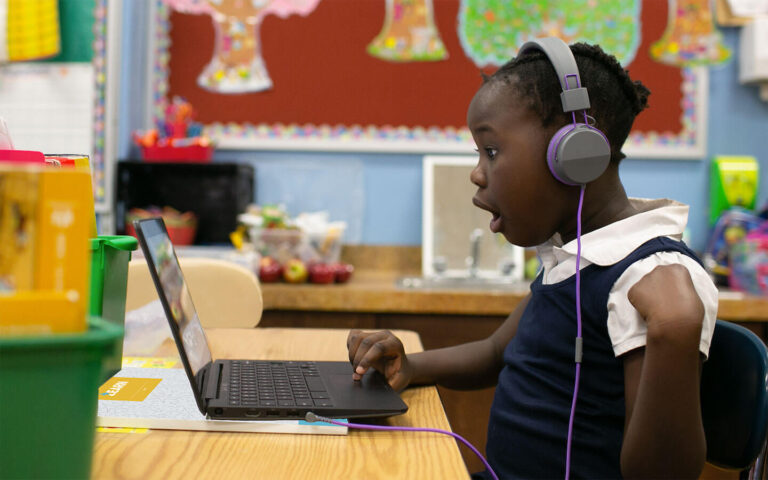
For example, in a recent quasi-experimental matching study of LENA Grow, a coaching tool that equips Pre-K educators with real-time feedback and data on their classroom talk patterns, researchers found that the tool may be able to effectively support them in improving kindergarten readiness outcomes for students. Analyses done in one LENA partner school district revealed that Pre-K classroom participation in LENA Grow was associated with 1.8 times greater odds of students demonstrating language and literacy readiness at kindergarten. By using technology to help educators understand and intentionally increase conversational turns with young children, LENA is able to support more age-appropriate classroom environments, leading to developmental gains long before kindergarten begins.
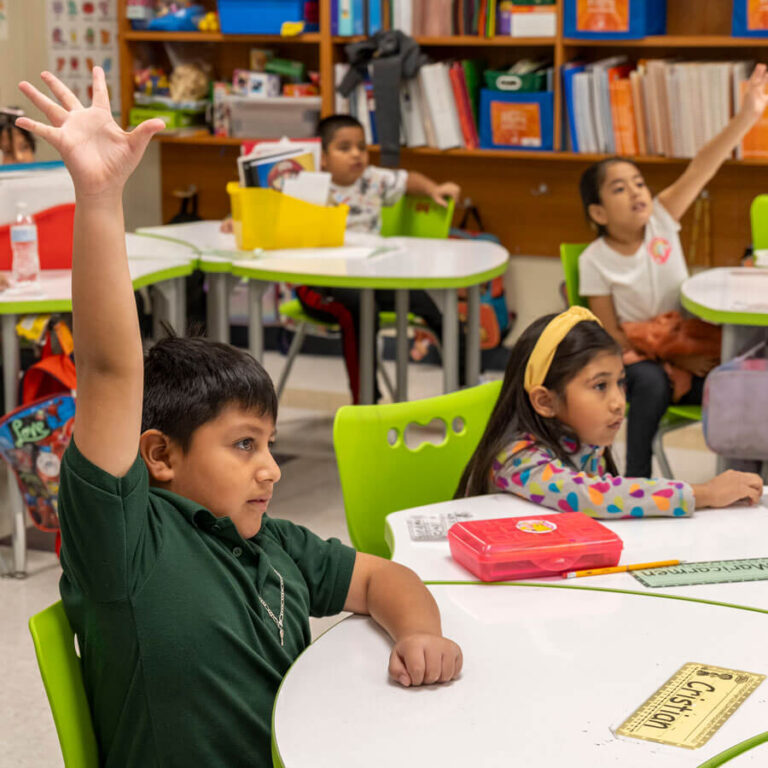
In K-12 settings, a new evaluation of PERTS’ Elevate platform, which helps teachers collect and respond to student perceptions of belonging and motivation in the classroom, provides complementary evidence about the power of feedback and reflection. Conducted by researchers from RAND, the recent efficacy study using propensity score matching found no direct impacts of Elevate on academic outcomes, but revealed meaningful gains in students’ perceptions of teachers caring and valuing student voice—precursors that could predict later improvements in engagement and performance.
Taken together, these studies highlight a crucial insight: technology can make professional learning more accessible and actionable by rooting it in data, tying it to specific practice, and improving its timeliness. Whether it’s providing data on classroom talk or student experience, technology-enabled interventions that provide educators with timely feedback grounded in real data points can shift the behaviors and skills that matter for learning.

Courtesy of Tools of the Mind
Technology can support the implementation of curriculum at scale, allowing for increased flexibility without decreasing fidelity.
Scaling high-quality instructional materials (HQIM) across classrooms and systems remains a perennial challenge. How can curriculum models grow without losing the elements that make them effective? Recent research on early learning curricula offers some practical answers.
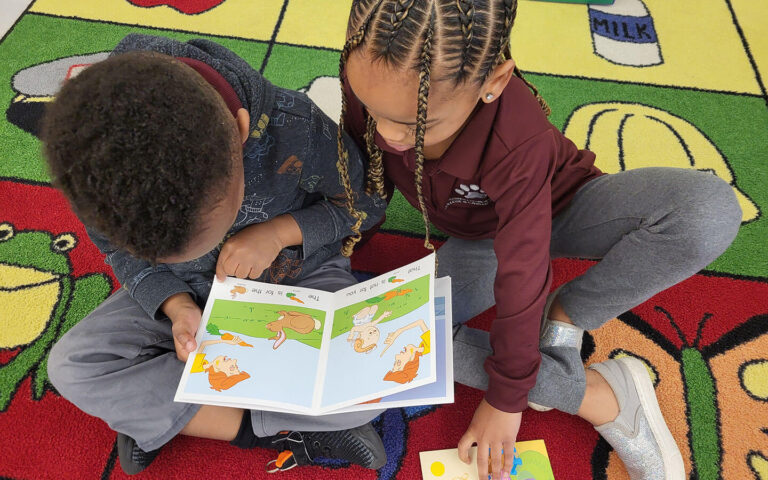
A case study of Tools of the Mind, a Pre-K and kindergarten program focused on self-regulation and foundational learning, chronicles how the curriculum has evolved to maintain quality as it expands. As Tools has applied learning from early research, its model has shifted to emphasize teacher reflection, collaboration, and professional learning, with all of these components incorporating technology-enabled support systems so teachers can access regular data on fidelity and receive real-time feedback from coaches to strengthen implementation. Early descriptive data reported in the study suggest that this approach has helped maintain implementation quality and may help improve student outcomes, even as the program scales to new contexts. Future research of the updated approach is needed to rigorously assess the impact of the updated approach, but progress to date shows the potential of technology to support fidelity while allowing for the flexibility needed to scale.
Ultimately, using technology to balance fidelity with flexibility, as Tools of the Mind has done, may be one answer to maintain both impact and educator engagement over time for curricula that have scaled beyond their initial design.
Advances in technology hold promise for increasing student impact at scale when done in tandem with high-quality traditional instruction.
For years, the education field has debated whether technology can truly and meaningfully improve learning outcomes. The most recent evidence suggests that the answer depends on how it’s implemented and, critically, whether it supports the work of teachers rather than substitutes for it.
For example, a recent randomized controlled trial (RCT), conducted by the University of Chicago Education Lab as part of the Personalized Learning Initiative, offers one of the clearest illustrations yet. In this large-scale study, middle school students in Greenville County, South Carolina, were randomly assigned to one of three groups: 1) virtual, small-group math tutoring that integrated high-quality digital resources into instruction; 2) access to digital resources only; or 3) business-as-usual instruction. Students who received the combined tutoring-plus-technology model made significant gains in math achievement (+0.11 SD) over business-as-usual instruction, while those assigned to the edtech-only digital resource condition experienced no measurable impact. These findings underscore that technology may be a force multiplier when embedded in strong instructional design—not a standalone solution. In this case, the digital platform helped tutors personalize instruction and provide timely feedback, but human connection and targeted support were necessary to drive learning gains.
A separate school-level RCT of the ASSISTments platform, a formative assessment tool that gives students immediate feedback on classwork and homework and provides clear information to teachers on student misconceptions, reinforces this lesson at scale. Conducted across 63 middle schools in North Carolina, the study found that students whose teachers used ASSISTments scored 0.10 standard deviations higher in math compared to control students one year after the end of the intervention. The largest gains were among students of color and those from lower-income backgrounds, pointing to the potential for well-implemented technology to promote educational equity when used to strengthen feedback loops and classroom practice. Importantly, while the tech-based assessment tool helped identify student misconceptions and guide students to practice in those areas, the tool was likely impactful because it also helped teachers effectively use this information to guide their instruction.
Together, these studies suggest that the field’s most poignant question is no longer whether technology helps, but rather, what conditions make it most impactful. The evidence is mounting that the right technology, paired with skilled educators and thoughtful implementation, can be a powerful lever for learning.
These studies suggest that the field’s most poignant question is no longer whether technology helps, but rather, what conditions make it most impactful.
Looking ahead
Across these studies, a clear message emerges: evidence-based programs thrive when human relationships remain at the center. Technology can extend reach, professional learning can deepen impact, and curricula can scale effectively, but only when implementation attends to the people who make learning possible.
As new research continues to emerge from our grantees, we remain focused on learning alongside them, sharing insights about what works, for whom, and under what conditions. By investing in rigorous evidence and open dissemination, we aim to help build a more equitable, data-informed education system where all children have the opportunity to thrive.
To stay up-to-date on the latest news from our Foundation, subscribe to our newsletter and explore the findings from our latest research grants in our Research Repository.