




As we begin 2026, we remain steadfast in our commitment to evidence-building at a moment when it’s urgently needed. Despite last year’s disappointing NAEP results, bright spots have emerged in states and districts that have implemented evidence-based reforms to instruction, with Mississippi, Louisiana, and Alabama as the most widely-lauded examples. This reinforces what we’ve long believed: research plays a key role in improving student outcomes. The education field needs rigorous, timely evidence about what works, for whom, and under what conditions, and that evidence can—and should—shape real decisions.
In 2025, Overdeck Family Foundation invested approximately $15 million in research and evidence-building. Collectively, we helped launch 34 studies across our priority funding areas, including but not limited to randomized controlled trials (RCT) of high-dosage tutoring programs and professional learning models, quasi-experimental and descriptive studies of policy reforms focused on student engagement and attendance, mixed-methods efforts to strengthen the evidence on whether and how artificial intelligence (AI)-enabled tools can improve teaching and learning, and longitudinal research to evaluate the impact of out-of-school time learning experiences on children’s development. Aligned with research and funding best practices, we continue to share what we’ve learned from this work in regular updates and through our Research Repository, reflecting our core belief that strong evidence can improve decisions that positively impact student outcomes.
In 2026, we plan to increase our investments in research, data, and evidence even further, bolstered by what we’ve learned and anticipating the learning opportunities ahead.
To identify this year’s priority areas for funding, we reflected on the key questions being asked by grantees, school leaders, education policymakers, teachers, parents, and students, and assessed how those questions relate to our updated strategies focused on accelerating students’ school readiness, school success, and future-readiness outcomes. As always, our ultimate goal is for the dollars we invest in research to yield evidence that is rigorous, usable, and timely. To that end, our 2026 research strategy centers on three priorities.
In 2026, we plan to increase our investments in research, data, and evidence even further, bolstered by what we’ve learned and anticipating the learning opportunities ahead.
1. Build strong evidence in our priority investment areas while developing innovative research and data methods that respond to emerging questions from the field
We plan to fund research that addresses cross-cutting questions that impact our ability to improve students’ school readiness, school success, and future-readiness outcomes. These investment domains and learning questions include:
- Attendance: What are the root causes of chronic absenteeism post-pandemic, and the impact of policies and interventions designed to reduce absenteeism at scale?
- Implementation Fidelity: What dosage and fidelity thresholds are required for instructional supports to generate positive effects, and what are the barriers to and facilitators of strong implementation at scale?
- Instructional Coherence: To what extent does instructional coherence across high-quality instructional materials (HQIM), assessment, and professional learning influence teacher practice, instructional quality, and student outcomes?
- AI in Education: What’s the impact of student- and teacher-facing AI solutions on teacher practices and student outcomes?
- Future Readiness: What new measures and tools could more effectively assess future-ready skills? To what extent can these skills (and more traditional academic skills) be assessed using existing work artifacts, daily classroom interaction data, and metadata from existing assessments?
Getting clearer, more rigorous evidence and data to answer these questions will help guide our grantmaking while also supporting decision-making at the systems-level, informing State and Local Education Agencies as they make critical choices about what’s best for students and educators.
In addition to topic-specific studies, a central priority for us in 2026 is to develop stronger, more flexible research methodologies. Innovation, particularly in AI and edtech, is outpacing traditional research timelines. Yet, the research studies and designs of today look remarkably similar to those used 25 years ago. To address this tension, we’re committed to helping the field develop methods and processes to make rigorous research faster, more affordable, and more accessible. In 2026, this includes:
- Exploring synthetic control group studies and other advanced quasi-experimental approaches that maintain rigor while reducing cost and timeline;
- Leveraging existing data from users of online platforms and edtech tools to generate ongoing insights into usage patterns, dosage, and student outcomes;
- Using AI to access, clean, and process student outcome data in near real time, allowing researchers and practitioners to identify trends and adjust implementation more quickly;
- Supporting rapid cycle evaluation models that allow organizations to test and refine features before scaling broadly; and
- Generating and increasing the accessibility, integration, and utility of education data to enable researchers and end users to form insights and take informed action.
Supporting innovative research methodology is core to our strategy. To shape decisions in real time, we must modernize how research is conducted, shared, and used. If your organization is pursuing work aligned with the priorities above, we invite you to contact us at research@overdeck.org. We consider concept notes on a rolling basis throughout the calendar year.
2. Develop rigorous, relevant, and actionable grantee evidence
We believe evidence is a critical but often overlooked step that organizations should invest in before scaling, which is why we’re continuing to prioritize high-quality, externally-conducted impact and implementation studies that estimate the effects of our grantees’ programs, models, and tools on student outcomes. In funding these studies, our goal is to help grantees gain clearer insight into whether and how their programs—aligned with their theory of change—support impact at scale. We prioritize research designed to help grantees measurably improve their evidence base, such as examining whether earlier small-scale findings can be replicated, or evaluating whether pre-post gains observed among participants are robust once examined relative to a comparison group. We view implementation research as a critical piece of that work and seek to fund studies that have both implementation and impact components.
In 2026, we plan to fund up to 12 external evaluation studies that will help us better understand how well our Direct Impact grantees’ models work, for whom, and under what circumstances. As in prior years, we’ll fund studies using a broad range of designs and require research grantees to pre-register all work, follow the pre-registered analysis plan when estimating effects, and commit to transparency—publicly disseminating findings, regardless of the results. These established scientific best practices are critical to building field-level understanding of what works for moving the needle on student outcomes, and what doesn’t.
We also support grantees that are not yet ready for rigorous external evaluation. Our research staff works directly with grantee partners to help them plan for and implement activities to move up the evidence-building continuum, with an eventual goal of launching a more rigorous evaluation. Part of this work involves funding third-party capacity-building engagements that provide more intensive support to grantees focused on meeting specific data- and research-related goals, such as strengthening internal data systems, designing data collection tools to assess impact and implementation, or establishing systems to support real-time data access and reporting for district and school partners.

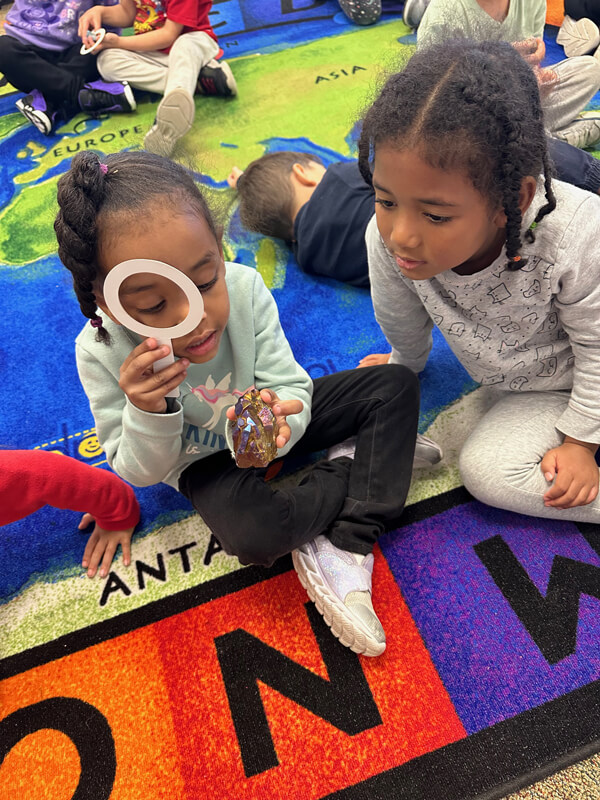
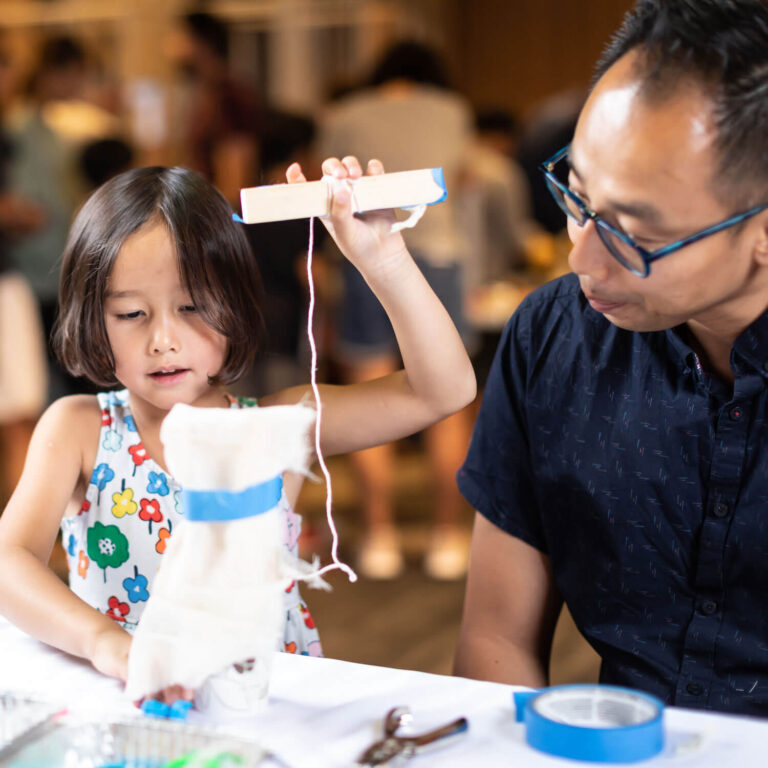
Courtesy of Michael Seto and BioBus
3. Promote use of evidence to drive policy and practice
New to our research strategy this year is an increased focus on ensuring that data and evidence inform real decisions. We have emerging examples of rigorous evidence serving as the primary driver of change, most recently with the adoption of science of reading practices and policies across the country. Our foundation’s investments in high-impact tutoring research and dissemination with grantees such as Accelerate and the National Student Support Accelerator have also helped spark momentum: in 2025, the federal government allocated more than $230 million to scaling and studying high-impact tutoring through its Education Innovation and Research competition, and we saw the introduction of more than 30 state bills focused on increasing access to high-dosage tutoring.
Yet, for so many more of our investment domains, evidence is a less important driver of decision-making at the local and state level. This often stems from a combination of factors: outdated procurement processes, mismatched available evidence and policy needs, a lack of effective communication, and political pressures. We’ve already done some work to address these challenges, including investments in the Center for Outcomes Based Contracting to hold districts and vendors accountable for student outcomes and the Council of Chief State School Officers to strengthen state adoption and implementation of high-quality instructional materials. In 2026, we plan to build on that work with grantmaking that strengthens the pipeline between evidence generation and adoption. Strategies could include, but are not limited to:
- Supporting state and national intermediaries to translate research into guidance for procurement and implementation;
- Improving communication of research findings; and
- Funding tools that help policymakers and practitioners access evidence that can inform decision-making for schools and classrooms.
We believe research should not sit on a shelf. Rather, it should inform how funds are allocated, how materials are selected, and how programs are implemented.
Looking Ahead
At a time of fiscal tightening, massive shifts in the federal education landscape, and rapid technological change, the need for strong evidence has never been greater. By prioritizing investments to generate research and encourage its use in decision-making, we’re building on our earlier body of work to ensure that evidence is not only rigorous, but also more actionable.
We’re excited for this year’s plans and look forward to sharing what we’re learning alongside our grantees, partners, and peers. We invite you to follow our research and evidence journey on our blog, LinkedIn, and in our newsletter.
Read about our updated mission and grantmaking strategies for 2026 and beyond to learn how we’re sharpening our focus areas and strategies to ensure children have the social-emotional skills, cognition, and agency to navigate the world around them.